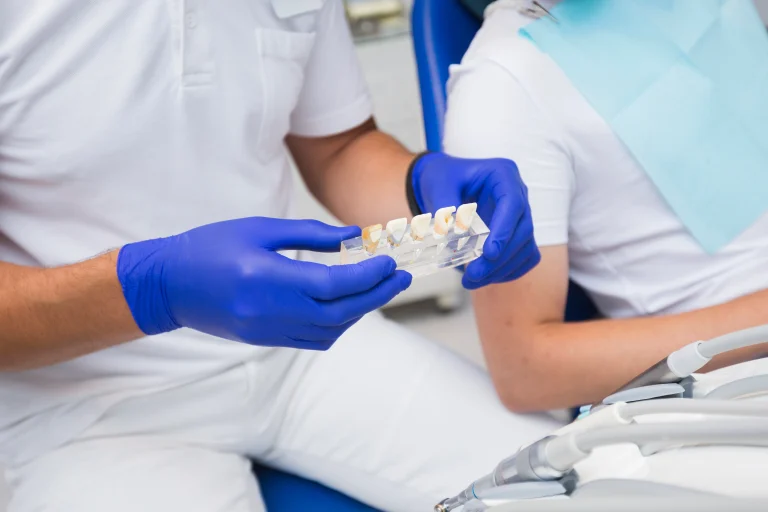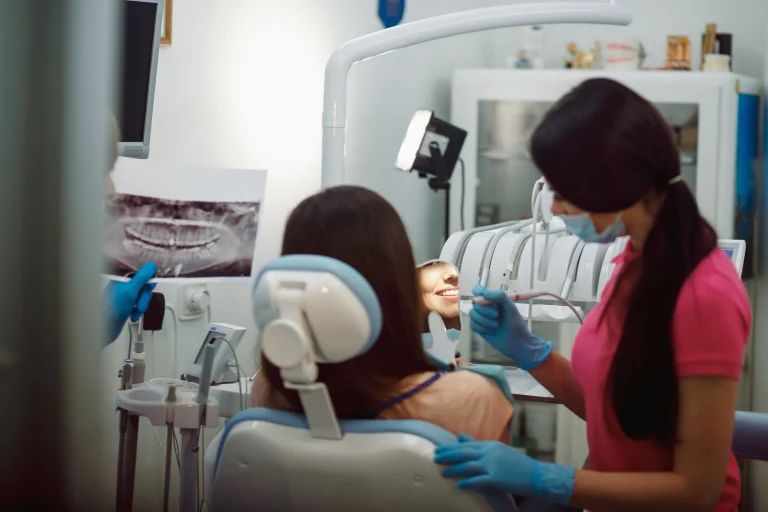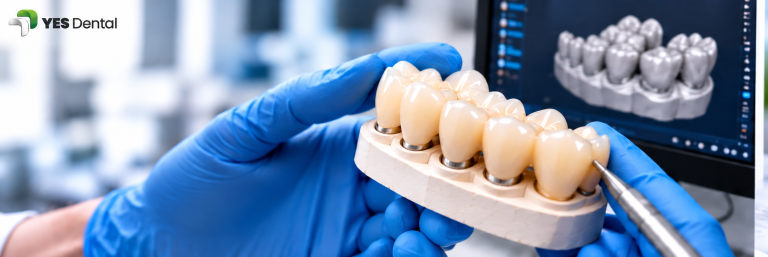
Dental restoration is a broad area of modern dentistry focused on repairing or replacing damaged, missing, or weakened teeth. Restorations such as crowns, bridges, implant restorations, removable prostheses, and full-arch solutions can help restore tooth function, structure, and appearance.
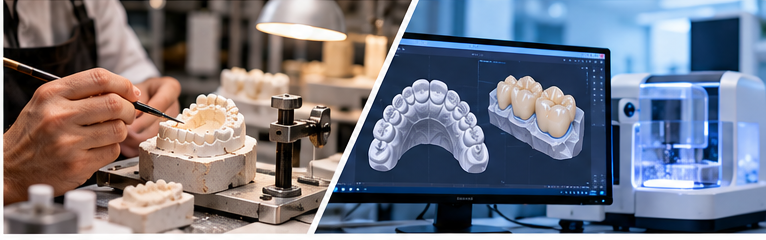
Today, many dental restoration workflows use digital impressions, CAD software, and digitally designed restorations. This allows dental clinics, laboratories, and CAD design teams to work together through a more organized digital workflow.
What Is Dental Restoration?
Dental restoration refers to the process of restoring the structure and function of a damaged, worn, decayed, or missing tooth or teeth. Depending on the patient’s clinical situation, a dental restoration may involve restoring an existing tooth or replacing a missing tooth. The appropriate restoration depends on factors such as the condition of the tooth, available supporting structures, treatment requirements, and the dentist’s clinical assessment.
Common dental restorations include:
- Dental crowns
- Dental bridges
- Implant restorations
- Full-arch and All-on-X restorations
- Removable restorations
- Telescope restorations
Modern dental restoration can combine clinical treatment with digital technologies such as intraoral scanning, CAD design, CAM manufacturing, and digital case communication.
Why Are Dental Restorations Needed?
Teeth can become damaged or lost for different reasons, including decay, fractures, wear, trauma, or tooth loss. A restoration may be considered when a tooth requires structural support or when missing teeth need to be replaced.
Depending on the case, dental restorations can help:
- Restore damaged tooth structure
- Replace missing teeth
- Support chewing function
- Improve the appearance of teeth
- Protect weakened teeth
- Restore an existing implant
- Reconstruct multiple missing teeth
- Support full-arch rehabilitation
The type of restoration required is determined by the dentist based on the individual clinical case.
What Are the Different Types of Dental Restorations?
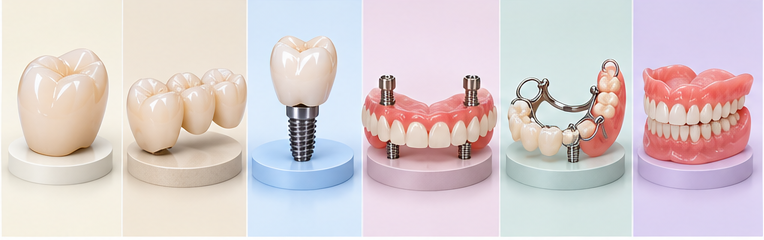
Dental restorations can be broadly divided into fixed, implant-supported, removable, and full-arch solutions.
1. Dental Crowns
A dental crown is a restoration designed to cover and protect a prepared tooth or, in some cases, support an implant restoration.
Crowns can be designed using digital CAD software based on the patient’s digital scan and prescribed requirements.
Common crown materials include zirconia and PFM, as well as other restorative materials selected according to the clinical and laboratory requirements.
2. Dental Bridges
A dental bridge can be used to replace one or more missing teeth by connecting artificial teeth to supporting structures.
Digital CAD design can help technicians create the bridge framework and define important design characteristics before manufacturing.
For laboratories handling multiple restoration cases, a structured digital workflow can make case communication and design review more organized.
3. Implant Restorations
Implant restorations are designed to restore teeth supported by dental implants.
The digital workflow may involve implant scan data, intraoral scans, implant components, and other case information required for the restoration design.
Depending on the case, implant-supported restorations may include individual crowns, bridges, or more complex restorations.
4. Full-Arch and All-on-X Restorations
Full-arch restorations are designed to replace or rehabilitate an entire arch of teeth.
All-on-X workflows can involve multiple implants supporting a full-arch prosthesis. Because these cases involve multiple components and design considerations, accurate case information and communication between the clinic, laboratory, and design team are important.
Digital CAD design can be used to develop the prosthetic design before the restoration moves into the manufacturing stage.
5. Removable Restorations
Removable restorations are designed to replace multiple missing teeth and can be removed by the patient.
Digital workflows are increasingly being incorporated into removable restoration design, allowing case information and design requirements to be managed digitally.
The exact design depends on the patient’s clinical requirements and the prescription provided by the dental professional.
6. Telescope Restorations
Telescope restorations are specialized prosthetic solutions that use a telescopic connection between components.
These restorations require careful planning and design because multiple components must work together within the prosthetic system.
Digital CAD tools can support the design process by allowing dental technicians to work with detailed digital case information.
What Is the Dental Restoration Process?
Although the workflow can vary depending on the type of restoration, a typical digital dental restoration process may include several stages.
Step 1: Clinical Examination and Treatment Planning
The dentist evaluates the patient’s oral condition and determines the appropriate treatment approach.
The clinical prescription provides the laboratory or CAD designer with the requirements needed for the restoration.
Step 2: Digital Case Capture
Depending on the workflow, the case may include intraoral scans, laboratory scans, photographs, radiographs, or other relevant information. These digital records provide the foundation for the restoration design.
Step 3: CAD Restoration Design
The digital case is imported into compatible CAD software. The dental technician or CAD designer develops the restoration according to the prescription and available case information.
Design considerations may include anatomy, margins, contacts, occlusion, emergence profile, and other case-specific requirements.
Step 4: Design Review
The proposed restoration can be reviewed digitally before manufacturing. If changes are required, the design can be revised based on the laboratory or clinical feedback. This digital review stage can help reduce unnecessary communication gaps and provide a clearer way to evaluate the proposed restoration.
Step 5: Manufacturing
Once the design is approved, the restoration can move into manufacturing. Depending on the restoration and material, manufacturing may involve milling, 3D printing, or other laboratory production processes.
For crown and bridge cases, this process can form part of a digital crown and bridge workflow connecting scan data, CAD design, quality control, manufacturing, and final inspection.
Step 6: Finishing and Delivery
After manufacturing, the restoration may undergo finishing, characterization, polishing, or other laboratory procedures before being delivered for clinical use.
How Does Digital CAD Design Support Dental Restoration?
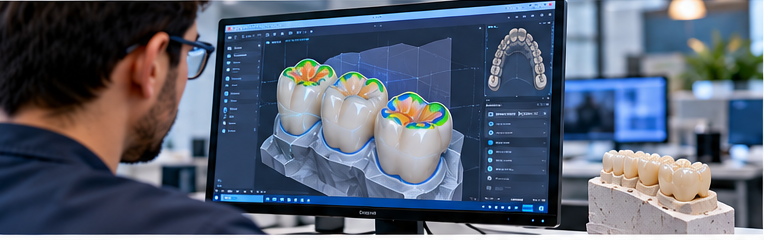
Digital CAD design has become an important part of many modern dental laboratory workflows.
Instead of designing a restoration entirely through traditional physical methods, dental technicians can use digital software to create and modify restorations within a virtual environment.
Some advantages of a digital workflow include:
- Digital case visualization
- Easier design modifications
- Organized case communication
- Repeatable digital workflows
- Integration with digital manufacturing
- Easier storage and transfer of case data
- Digital review before manufacturing
For dental laboratories managing a high volume of cases, outsourcing CAD design can also provide access to additional digital design capacity when required.
Digital vs. Traditional Dental Restoration Workflows
Traditional dental laboratory workflows often rely heavily on physical models and manual processes.
Digital workflows introduce technologies such as intraoral scanning, laboratory scanning, CAD software, and digital manufacturing. However, digital dentistry does not necessarily eliminate the role of skilled dental technicians.
Instead, digital tools can support technicians by providing a virtual environment for designing and reviewing restorations before manufacturing. The most appropriate workflow depends on the restoration type, laboratory capabilities, equipment, clinical requirements, and case complexity.
What Information Is Needed for a Dental Restoration Case?
A complete and clearly documented case can help the laboratory or CAD designer understand the required restoration.
Depending on the case, information may include:
- Digital intraoral scans
- Laboratory scans
- Patient photographs
- Prescription details
- Preparation information
- Implant information where applicable
- Restoration type
- Material requirements
- Shade information
- Occlusal requirements
- Additional clinical instructions
The exact information required varies according to the restoration and the laboratory’s workflow.
Clear communication between the dental clinic, laboratory, and CAD design team is therefore an important part of digital case management.
How Can Yes Dental Support Dental Restoration Workflows?
Yes Dental provides digital dental CAD design and manufacturing support for dental laboratories and clinics.
Its digital workflow covers multiple restoration categories, including:
- Crown and bridge CAD design
- Implant CAD design
- Full-arch and All-on-X CAD design
- Removable denture CAD design
- Night guard design
- Dental restoration manufacturing
Dental laboratories can submit digital case information for design according to their specific requirements. The design can then be reviewed before moving forward with the next stage of the workflow.
For laboratories working with multiple restoration types, having a dedicated digital CAD design workflow can help support case management without requiring every design to be completed entirely in-house.
Frequently Asked Questions About Dental Restoration
What is a dental restoration?
A dental restoration is a treatment used to repair or replace damaged, weakened, or missing teeth. Examples include crowns, bridges, implant restorations, removable restorations, and full-arch solutions.
What are the main types of dental restorations?
Common types include crowns, bridges, implant restorations, full-arch or All-on-X restorations, removable restorations, and telescope restorations.
How does CAD design help with dental restorations?
CAD design allows dental professionals and technicians to create restorations digitally before manufacturing. It can support visualization, design modifications, digital communication, and integration with manufacturing workflows.
Are all dental restorations designed using CAD?
No. Dental restoration workflows can vary. Some laboratories use fully digital workflows, while others combine digital and traditional techniques depending on the case, equipment, materials, and laboratory processes.
Can dental laboratories outsource restoration CAD design?
Yes Dental laboratories can work with external CAD design providers when they require additional design capacity or specialized digital design support.
What information is required for a dental CAD restoration?
Requirements vary by case but may include digital scans, photographs, prescriptions, implant information, material requirements, shade information, and specific design instructions.
Key Takeaways
Dental restoration involves repairing or replacing damaged or missing teeth using different types of restorative solutions.
The most common restoration categories include crowns, bridges, implant restorations, full-arch solutions, removable restorations, and telescope restorations.
Digital CAD design can support the restoration workflow by allowing restorations to be designed, reviewed, modified, and prepared for manufacturing in a digital environment.
For dental laboratories and clinics, a well-organized digital workflow can help connect clinical information, CAD design, review, and manufacturing into a more structured process.
Need Dental CAD Design Support?
If your dental laboratory needs professional CAD design support for crowns, bridges, implants, full-arch, removable, or other dental restoration cases, Yes Dental can support your digital workflow from case submission through design and manufacturing.
Contact Yes Dental to discuss your dental CAD design and restoration requirements.