
Dental crowns and bridges are two of the most commonly used dental restoration solutions for restoring damaged teeth and replacing missing teeth. While a crown generally restores an individual tooth, a bridge can replace one or more missing teeth by connecting artificial teeth to supporting structures.
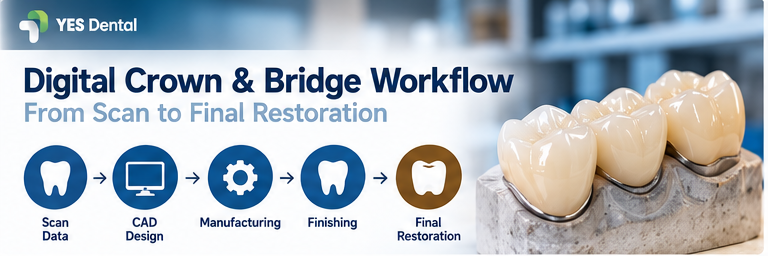
Modern crown and bridge workflows increasingly combine digital scanning, CAD design, and dental manufacturing. This digital approach allows dental laboratories and clinics to manage cases through a structured workflow, review designs before production, and integrate restoration design with modern manufacturing processes.
What Is a Dental Crown?
A dental crown is a custom-made restoration designed to cover or restore a prepared tooth. It can help restore the shape and function of a tooth that has been damaged, weakened, or otherwise requires a restorative solution.
Crowns can also be used as part of implant-supported restorations. The design of a crown depends on several factors, including the tooth preparation, clinical requirements, occlusion, contacts, material selection, and laboratory prescription.
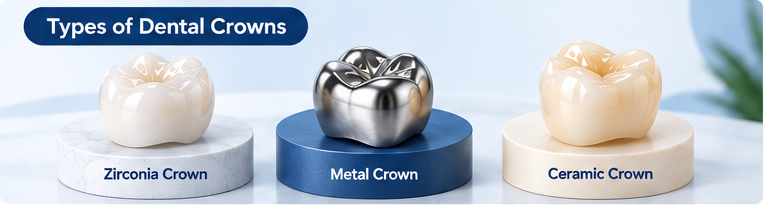
Common crown materials include:
- Zirconia
- Metal
- Ceramic materials
- Other restorative materials used according to the specific case
The final material and restoration design should be determined according to the clinical and laboratory requirements of each case.
What Is a Dental Bridge?
A dental bridge is a fixed restoration designed to replace one or more missing teeth.
Instead of restoring only one tooth, a bridge connects multiple components to span the area where teeth are missing. Depending on the case, the supporting structures may be natural teeth or dental implants.
A bridge can include:
- Supporting crowns or retainers
- One or more artificial teeth
- Connectors between the components
The design depends on factors such as the location of the missing teeth, supporting structures, occlusion, preparation, and the dentist’s prescription.
What Are the Main Types of Dental Crowns?
Different crown materials and designs can be used depending on the requirements of the restoration.
1. Zirconia Crowns
Zirconia is widely used for various dental crown and bridge restorations and is well suited to digital CAD/CAM workflows.
A zirconia crown can be digitally designed from scan data according to the required anatomy, margins, contacts, occlusion, and other case-specific requirements.
The completed digital design can then be prepared for the appropriate manufacturing process.
2. Metal Crowns
Metal crowns have been used in dental laboratories for many years and remain applicable for certain restorative cases.
Digital design can also be incorporated into metal crown workflows. The CAD design needs to consider the tooth preparation, anatomy, occlusion, contacts, and manufacturing specifications.
3. Ceramic Crowns
Various ceramic materials may be used for dental crowns depending on the clinical requirements and laboratory workflow.
Digital technologies can support the design and manufacturing preparation of these restorations, although the appropriate material and workflow depend on the individual case.
What Are the Main Types of Dental Bridges?
Dental bridges can also be designed in different configurations.
Traditional Bridges
Traditional bridges use supporting teeth adjacent to the missing tooth area.
The restoration is designed to connect the supporting units with the replacement tooth or teeth. The design must account for the relationship between the supporting teeth, replacement units, contacts, and occlusion.
Implant-Supported Bridges
Implant-supported bridges use dental implants to support the restoration rather than relying only on natural teeth.
These cases can involve additional design considerations, including implant positions, components, emergence profiles, occlusion, and the overall prosthetic design.
Multiple-Unit Bridges
Multiple-unit bridges can replace several adjacent missing teeth, depending on the clinical situation.
CAD software can be used to design the connected restoration digitally before it moves to the manufacturing stage.
What Is the Difference Between a Crown and a Bridge?
The main difference is their purpose.
| Dental Crown | Dental Bridge |
|---|---|
| Generally restores an individual tooth | Can replace one or more missing teeth |
| Covers or restores a prepared tooth | Spans a missing-tooth area |
| Can be tooth-supported or implant-supported | Can be tooth-supported or implant-supported |
| Usually designed as an individual restoration | Designed as a connected restoration |
The appropriate restoration depends on the patient’s clinical condition and the treatment plan established by the dental professional.
What Materials Are Used for Crowns and Bridges?
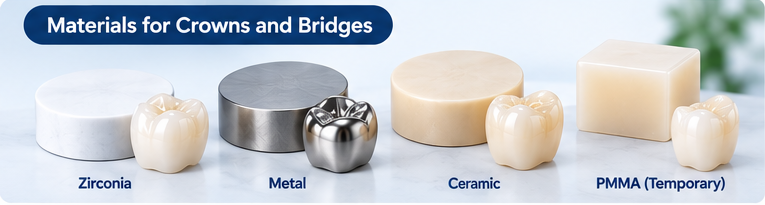
Material selection depends on the restoration type, clinical requirements, laboratory preferences, and manufacturing process.
Zirconia
Zirconia is commonly used for different crown and bridge applications and can be integrated into a fully digital CAD/CAM workflow.
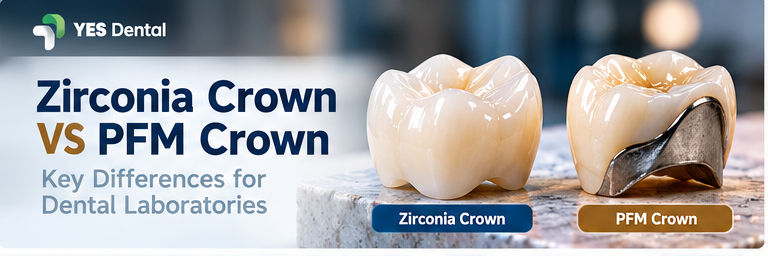
The differences between zirconia and PFM crowns can affect material selection, CAD design considerations and manufacturing workflows.
Metal
Metal-based restorations continue to be used for certain dental restoration requirements. They can also be incorporated into digital design and manufacturing workflows.
Ceramic Materials
Different ceramic materials may be selected for particular cases depending on the required properties, clinical prescription, and laboratory process.
The choice of material should therefore be considered together with the restoration type and intended application.
How Are Dental Crowns and Bridges Designed?
odern crown and bridge workflows can involve several digital stages, forming a structured digital crown and bridge workflow from case submission through design, manufacturing and finishing.
1. Case Submission
The dental laboratory or clinic provides the information required for the restoration.
This may include:
- Digital scans
- Patient photographs
- Prescription information
- Preparation details
- Shade information
- Material requirements
- Implant information, where applicable
2. Digital Case Preparation
The digital scan data is reviewed and prepared for the design stage.
The CAD designer evaluates the available information and identifies the relevant preparation, restoration, and supporting areas.
3. CAD Design
The crown or bridge is designed using dental CAD software.
Depending on the restoration, the designer may consider:
- Tooth anatomy
- Preparation margins
- Proximal contacts
- Occlusion
- Emergence profile
- Connector dimensions
- Pontic design
- Implant-related components
The objective is to create a digital restoration that follows the case prescription and available clinical information.
4. Design Review
The completed design can be reviewed before manufacturing.
If modifications are required, the design can be adjusted according to the laboratory or clinical instructions.
5. Manufacturing
Once the design has been approved, it can move into the appropriate manufacturing process.
Depending on the material and restoration, this may involve milling, 3D printing, or another laboratory production method.
6. Finishing
After manufacturing, the restoration may undergo finishing, polishing, characterization, or other laboratory procedures before being prepared for clinical delivery.
Why Is Digital CAD Important for Crown and Bridge Work?
Dental CAD design provides a virtual environment in which crowns and bridges can be designed and reviewed before manufacturing.
For dental laboratories, a digital workflow can support:
- Digital visualization of restorations
- Easier design modifications
- Structured case communication
- Design review before production
- Integration with manufacturing
- Digital storage and transfer of case information
CAD does not replace the knowledge and experience of dental technicians. Instead, it provides tools that allow technical expertise to be applied within a digital workflow.
For laboratories managing multiple restoration cases, digital CAD can also make it easier to collaborate with external design teams when additional design capacity is required.
What Information Is Needed for Crown and Bridge Design?
A complete case submission helps the CAD designer understand the restoration requirements.
Depending on the case, information may include:
- STL or compatible digital scan files
- Preparation scans
- Opposing arch scans
- Bite or occlusal records
- Patient photographs
- Prescription details
- Shade information
- Material requirements
- Implant information
- Specific laboratory instructions
The exact information required varies depending on the restoration, clinical situation, laboratory workflow, and manufacturing requirements.
Clear communication between the clinic, dental laboratory, and CAD design team can help keep the digital workflow organized.
How Can Yes Dental Help With Crown and Bridge Restorations?
Yes Dental provides dental CAD design and manufacturing support for dental laboratories and clinics.
For crown and bridge cases, Yes Dental can support digital design workflows for different restoration requirements, including zirconia and metal crown and bridge designs.
The workflow can begin with digital case information supplied by the laboratory. The restoration is then digitally designed according to the case requirements before moving toward the next stage of the workflow.
For dental laboratories that want additional digital design capacity without completing every CAD case entirely in-house, working with a dedicated CAD design partner can be a practical way to supplement their existing workflow.
Frequently Asked Questions About Dental Crowns and Bridges
What is the difference between a crown and a bridge?
A crown generally restores or covers an individual tooth, while a bridge is designed to replace one or more missing teeth by connecting multiple restorative components.
What materials are commonly used for dental crowns?
Common materials include zirconia, metal, and different ceramic or restorative materials. The appropriate material depends on the clinical and laboratory requirements of the case.
Can zirconia be used for both crowns and bridges?
Yes. Zirconia can be used for various crown and bridge restorations when it is appropriate for the specific case and manufacturing workflow.
Are dental bridges designed using CAD software?
Many modern dental laboratories use digital CAD workflows to design bridges before manufacturing. The exact workflow depends on the laboratory, restoration type, materials, and available equipment.
What files are needed for digital crown and bridge design?
Requirements vary, but a case may include digital scans, preparation information, opposing arch scans, bite records, photographs, prescription details, and material specifications.
Can dental laboratories outsource crown and bridge CAD design?
Yes. Dental laboratories can work with external CAD design providers when they require additional digital design capacity or want to supplement their existing workflow.
What does Yes Dental provide for crown and bridge cases?
Yes Dental provides dental CAD design and manufacturing support for dental laboratories and clinics. Its restoration workflow includes crown and bridge solutions and can support digital case design based on the laboratory’s requirements.