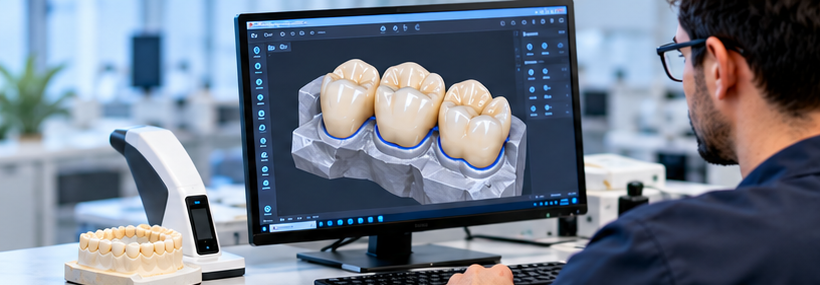
Dental CAD design is the digital process of creating 3D designs for dental restorations using computer-aided design (CAD) software. It can be used for crowns, bridges, implant restorations, full-arch cases, removable restorations and telescope restorations.
For modern dental laboratories and clinics, CAD design can connect digital case data with the restoration manufacturing workflow. Instead of relying entirely on conventional manual design methods, dental professionals can work with digital scans and computer-generated restoration designs that can be reviewed and modified before production.
In this guide, we’ll explain how dental CAD design works, what types of restorations can be designed, and how Yes Dental can support dental laboratories and clinics with digital dental design services.
How Does Dental CAD Design Work?
1. Case Submission
Depending on the case, this may include:
- Intraoral or model scan data
- Preparation information
- Opposing arch data
- Bite or occlusion information
- Restoration requirements
- Material specifications
- Implant information
- Additional case instructions
2. Digital Case Preparation
The submitted digital data is reviewed and prepared for the design process.
The designer examines the available scan data and identifies the areas required for creating the restoration. The quality and completeness of the digital case information are important parts of the overall workflow.
3. CAD Restoration Design
The restoration is then digitally designed using specialized dental CAD software.
Depending on the restoration, the designer may work on:
- Tooth anatomy
- Margins
- Contacts
- Occlusion
- Emergence profile
- Connector design
- Implant components
- Restoration positioning
The exact design requirements depend on the type of restoration and the information supplied with the case.
4. Design Review and Revision
Once the initial design is completed, it can be reviewed according to the agreed workflow. If modifications are required, the design can be adjusted based on the feedback provided by the laboratory or dental professional.
5. Final Approval and Manufacturing
After the design is approved, it can move to the next stage of the laboratory workflow. Depending on the case and material, the digital design may be used for processes such as milling, 3D printing, sintering, casting or other manufacturing methods.
For crown and bridge cases, this forms part of a digital crown and bridge workflow that connects scan data, CAD design, quality control and manufacturing.
What Types of Dental Restorations Can Be Designed Using CAD?
Dental CAD design can support a wide range of restorative applications.
Zirconia Crown & Bridge
CAD software can be used to create digital designs for zirconia crowns and bridges, including considerations such as anatomy, margins, contacts, occlusion and connector design.
The choice between zirconia and PFM crowns can also affect design parameters, material thickness and the subsequent manufacturing workflow.
Metal Crown & Bridge
Metal restorations can also be incorporated into digital laboratory workflows, allowing the restoration to be designed and reviewed digitally before production.
Implant Restorations
Implant restoration design can involve implant positioning, emergence profile, abutment considerations, occlusion and restoration morphology.
Full Arch / All-on-X
Full-arch cases require consideration of multiple digital elements, including arch form, tooth positioning, occlusion, implant positions and prosthetic requirements.
Removable Restorations
Digital workflows can also support the design of various removable restorations, depending on the case requirements and available digital information.
Telescope Restorations
Telescope restorations involve multiple components and require careful planning. Digital CAD workflows can help create and review these components before manufacturing.
What Are the Benefits of Dental CAD Design?
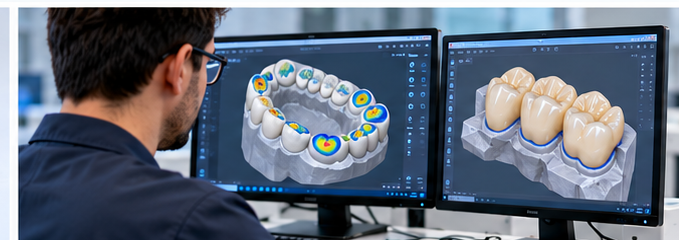
Dental CAD design can provide several practical advantages within a modern digital workflow.
Digital Workflow
Dental cases can be managed using digital files, reducing dependence on entirely physical workflows.
Easier Design Review
Digital designs can be viewed and reviewed before manufacturing, allowing potential modifications to be addressed earlier in the process.
Repeatable Digital Process
Digital case files and designs can be stored and managed as part of an organized laboratory workflow.
Better Digital Collaboration
Digital files and designs can make communication between clinics, laboratories and CAD designers more structured.
Integration With Manufacturing
Approved digital designs can become part of a workflow that connects scanning, CAD design and digital manufacturing.
How Can YesDental Help Dental Laboratories?
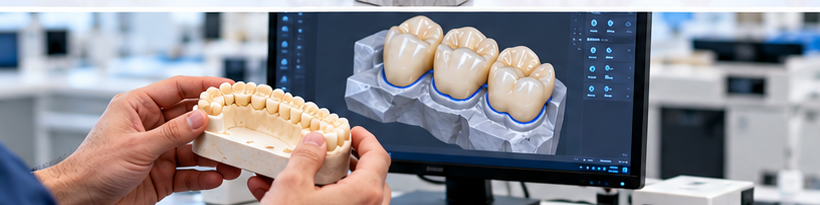
Dental laboratories may sometimes need additional CAD design capacity, particularly when case volumes increase or when they require support for specific restoration types.
Yes Dental provides digital dental CAD design services for dental laboratories and clinics.
Our services cover:
- Zirconia Crown & Bridge Design
- Metal Crown & Bridge Design
- Implant Restoration Design
- Removable Restoration Design
- Full Arch / All-on-X Design
- Telescope Restoration Design
A laboratory can incorporate external CAD design support into its existing digital workflow rather than necessarily managing every design requirement internally.
The workflow can be structured around the laboratory’s case requirements, digital files and review process.
How Can YesDental Help Dental Clinics?
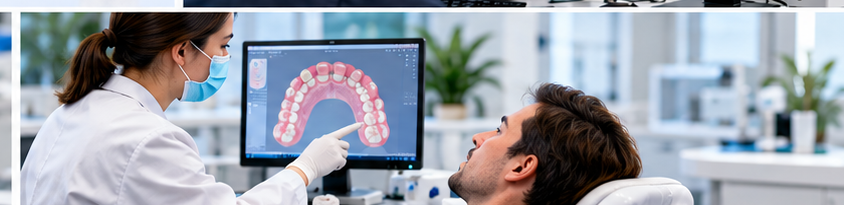
Dental clinics increasingly work with digital impressions, scans and laboratory workflows.
When CAD design support is required, YesDental can become part of that digital workflow by providing professional dental restoration design services.
A typical workflow may look like:
Clinic / Laboratory → Digital Case Data → YesDental → CAD Design → Review → Approval → Manufacturing
The exact process can vary depending on the restoration and the requirements of the dental professional or laboratory.
What Information Is Needed for a Dental CAD Case?
The exact requirements depend on the restoration, but a typical digital case may include:
- Scan files
- Preparation information
- Opposing arch
- Bite/occlusion information
- Restoration type
- Material requirements
- Implant information, where applicable
- Prescription
- Specific design instructions