Choosing a dental lab is about more than finding the right price. Dentists need restorations that meet the clinical requirements, clear communication during case handling, and a workflow they can rely on.
Problems can arise when a crown needs repeated adjustments, a delivery takes longer than expected, or important case instructions are missed. While not every issue originates in the laboratory, choosing the right partner and improving case communication can help reduce avoidable difficulties.
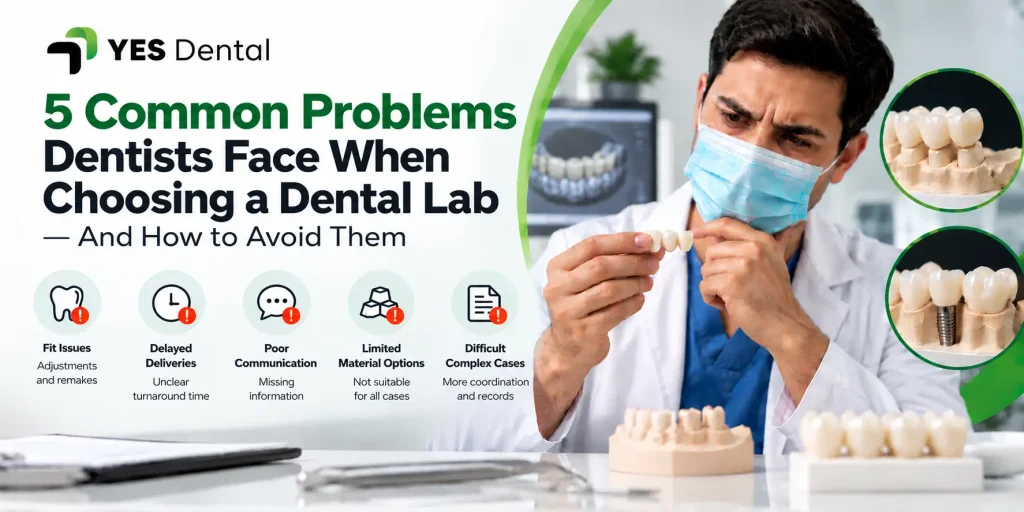
Here are five common problems dentists should look out for when choosing a dental lab—and how to avoid them.
1. Crown and Bridge Restorations That Need Repeated Adjustments
A crown that does not fit as expected can mean extra chairside adjustments, another appointment or, in some cases, a remake. Issues may involve marginal fit, proximal contacts, occlusion or restoration contours.
These problems can have different causes, including incomplete scans, unclear preparation margins, missing bite records or design and manufacturing factors.
How to avoid it:
- Send clear scans or accurate impressions.
- Include opposing arch and bite records.
- Provide the tooth number, material, shade and restoration details.
- Communicate specific requirements before the case enters production.
A complete prescription gives the dental technician a clearer understanding of the case from the start.
2. Unclear Turnaround Times and Delayed Deliveries
When a restoration arrives later than expected, the clinic may need to reschedule appointments or update the patient. Delays can occur because of case complexity, missing information, design revisions, material availability or manufacturing requirements.
The problem becomes harder to manage when the clinic does not know the expected timeline or whom to contact for an update.
How to avoid it:
- Confirm the expected turnaround time before submitting the case.
- Ask whether the timeline includes design, production and finishing.
- Respond promptly to requests for additional information.
- Agree on how the lab will communicate unexpected delays.
Rather than relying on a general estimate, confirm the expected timeline for the specific restoration.
3. Poor Communication Between the Dentist and the Lab
Small details can make a difference to a restoration. Missing shade information, unclear material preferences or incomplete design instructions may lead to clarification requests, revisions or a result that does not match the dentist’s expectations.
Good communication works both ways. The dentist needs to provide complete instructions, and the laboratory needs a clear process for raising questions.
How to avoid it:
Use a consistent case-submission checklist that includes:
- Tooth number and restoration type.
- Material and shade requirements.
- Clear scans or impressions.
- Bite and opposing arch records.
- Relevant photographs and design instructions.
For complex cases, discuss important requirements with the laboratory before production begins.
4. Limited Material Options or Unclear Product Information
Not every restoration requires the same material. Dentists may consider zirconia, PFM or lithium disilicate depending on aesthetics, available space, occlusion, restoration design and the material’s clinical indications.
A laboratory may not be suitable for every clinic if its available products do not match the clinic’s case requirements or if product information is unclear.
How to avoid it:
Before choosing a lab, ask which materials and restoration types it offers. Confirm product availability, relevant specifications and any limitations that may affect the case. Material selection should be based on clinical assessment and the manufacturer’s instructions, rather than price alone.
5. Difficulty Managing Complex Cases and Digital Workflows
Implant restorations, full-arch prostheses and other complex cases may require several records, detailed prescriptions and coordination between the dentist and laboratory.
Missing scan data, unclear responsibilities or uncertainty about the design-review process can create additional work.
How to avoid it:
- Confirm which scan files and formats the lab accepts.
- Ask what records are required for the specific restoration.
- Clarify whether a digital design preview is available.
- Provide relevant implant information and clinical instructions.
- Agree on how revisions and missing information will be handled.
A well-defined workflow helps both sides understand what is needed before work begins.
How Does YES Dental Support Dentists and Clinics?
YES Dental supplies dental restoration products to dentists and clinics, with options covering crowns and bridges, implant restorations, full-arch prostheses and removable restorations.
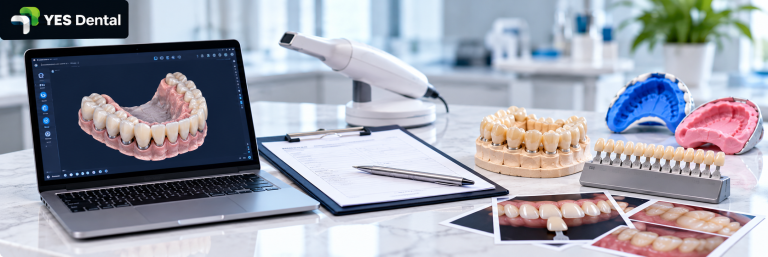
Dentists can submit digital scan files or physical impressions with a clear prescription and discuss their case requirements with the team. In Faridabad, clinic visits for intraoral scanning can also be arranged on request.
The following table summarises how the available YES Dental offering relates to the concerns discussed above.
Dental Lab Comparison: What to Look For and How YES Dental Fits In
| What Dentists Need | What to Check With Any Dental Lab | YES Dental |
|---|---|---|
| Crown and bridge options | Available materials and restoration types | Zirconia, PFM and e.max crowns and bridges |
| Implant and complex restorations | Available products and case requirements | Implant restorations and Full Arch / All-on-X prostheses |
| Removable restorations | Available denture and removable options | Removable restorations and dentures |
| Case submission | Accepted files, impressions and prescription details | Digital scan files or physical impressions with a prescription |
| Digital workflow support | Accepted records and case-specific requirements | Case discussions and digital submissions |
| Intraoral scanning | Whether clinic visits are available | Visits can be arranged on request in Faridabad |
| Communication | Clear contact and case-coordination process | Contact the team to discuss case requirements |
Checklist: Before Choosing a Dental Lab
efore sending your next case, ask yourself:
- Have I checked the lab’s available products and materials?
- Are the submission requirements clear?
- Have I confirmed the expected turnaround time?
- Is there a clear way to resolve questions about a case?
- Does the lab explain how revisions and quality checks are handled?
- Can it accommodate the digital records or impressions my clinic uses?
These questions can help you evaluate whether a laboratory is suitable for your practice and the types of cases you handle.
Conclusion
The most common challenges when choosing a dental lab involve restoration fit, turnaround expectations, communication, material availability and case coordination. Dentists can help avoid unnecessary complications by submitting complete records, confirming requirements and choosing a laboratory whose capabilities match their clinical needs.
A clear process and open communication give both the dentist and laboratory a better starting point for managing each case.
Frequently Asked Questions
What should dentists look for when choosing a dental lab?
Dentists should consider restoration options, communication, turnaround expectations, case-submission requirements, quality checks, pricing and how the laboratory handles revisions or incomplete records.
Why might a dental crown need adjustments?
Possible reasons include scan or impression issues, unclear preparation margins, bite-record inaccuracies, design considerations or manufacturing factors. The dentist and laboratory should review the case to understand the cause.
What information should be sent with a dental lab case?
Depending on the restoration, this may include clear scans or impressions, tooth number, restoration type, material and shade details, opposing arch records, bite information, photographs and specific instructions.
Which crown materials should dentists discuss with their dental lab?
Zirconia, PFM and lithium disilicate are among the options dentists may discuss. The appropriate material depends on clinical requirements, restoration design and the manufacturer’s indications.
Does YES Dental accept digital scans and physical impressions?
Yes. Dentists can submit digital scan files or physical impressions with a clear prescription. Contact the team to confirm the requirements for your particular case.