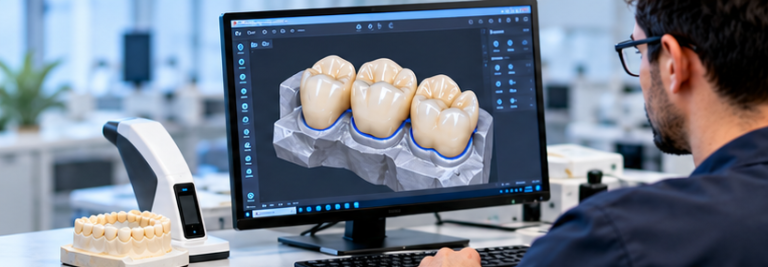
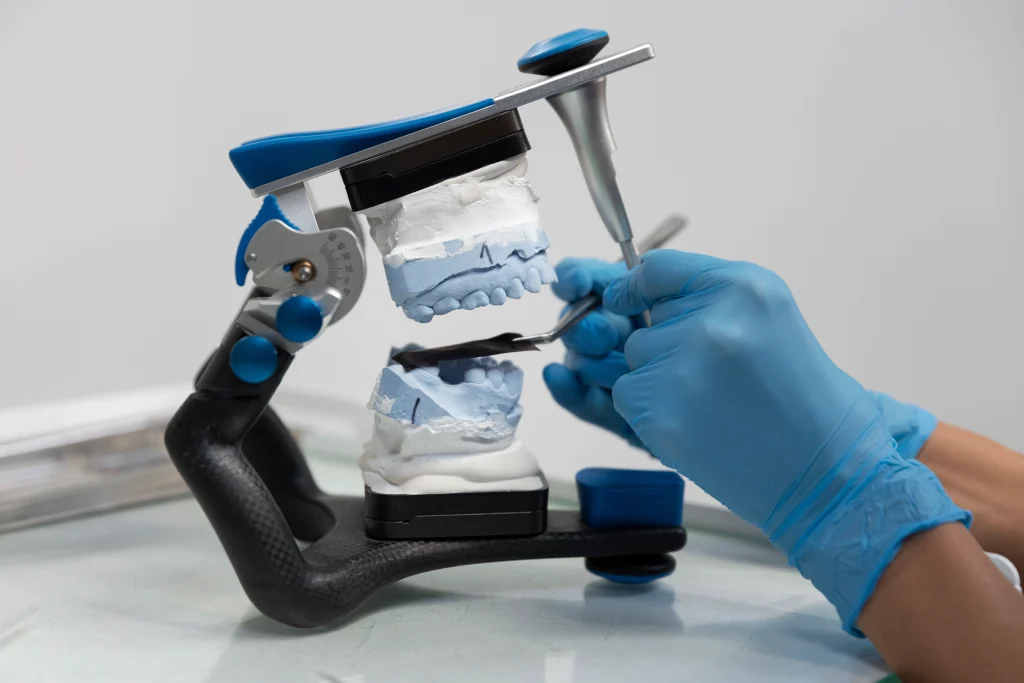
Digital dental lab services use digital records, computer-aided design (CAD) and computer-aided manufacturing (CAM) to support the design and production of dental restorations and prostheses. Depending on the laboratory’s capabilities, these services may include crowns, bridges, implant restorations, full-arch prostheses and digital dentures.
For dentists and dental clinics, digital dental workflows can support communication with the laboratory, allow design review where available, and help manage digital case records. The actual workflow depends on the restoration, material, equipment and clinical requirements.
YES Dental supports dental clinics and laboratories with dental restoration products and digital workflows. This guide explains how digital dental lab services work, how fixed restorations and dentures differ, what information to submit, and what to consider when choosing a dental laboratory.
Key Takeaways
- Digital dental lab services can combine digital records, CAD design and suitable manufacturing processes.
- Fixed restorations and removable dentures require different clinical records and design considerations.
- Milling and 3D printing use different materials and processes; neither method is universally better.
- Accurate scans, clear prescriptions and appropriate clinical records remain essential.
- Dentists should confirm a laboratory’s accepted file formats, available materials, design-review process and quality checks before submitting a case.
1. What Are Digital Dental Lab Services?
Digital dental lab services use digital records and software to plan, design or manufacture dental restorations and prostheses.
Depending on the laboratory and the case, a digital dental workflow may involve four main stages.
Digital Records
The laboratory receives digital impressions from an intraoral scanner or digital files created by scanning conventional impressions or physical models.
The records must capture the anatomy required for the intended restoration.
CAD Design
Computer-aided design software is used to create a digital restoration or prosthesis. Design requirements vary according to the case and may include tooth anatomy, margins, contacts, occlusion and implant-related components.
CAM Manufacturing
Computer-aided manufacturing uses digital design data to support production. Depending on the restoration, material and equipment, this may involve milling, 3D printing or another suitable manufacturing process.
Finishing and Quality Checks
The restoration or prosthesis undergoes the processing, finishing and inspection required for its material and design. Skilled technicians remain important throughout this stage.
For example, a dentist may submit an intraoral scan and prescription for a crown. The laboratory reviews the records, designs the restoration and proceeds with the agreed manufacturing workflow.
Not every digital dental laboratory offers the same services, equipment or review options. Confirm the available workflow before submitting a case.
2. Digital Dental Workflows for Fixed Restorations
Fixed dental restorations include crowns, bridges and selected inlays and onlays. Digital workflows can change how records are transferred, how restorations are designed and how dentists communicate feedback to technicians.
Conventional vs Digital Fixed Restoration Workflows
| Stage | Conventional Workflow | Digital Workflow |
|---|---|---|
| Records | Physical impression and model | Intraoral scan or scanned impression/model |
| Design | Manual waxing and laboratory procedures, as appropriate | CAD design using suitable software |
| Design review | Physical assessment and try-in, where indicated | Digital preview may be available |
| Manufacturing | Processes such as casting, pressing or layering | Milling or 3D printing where compatible, followed by appropriate finishing |
| Replacement | May require new impressions, models and fabrication | Stored design files may help when records remain suitable |
| Communication | Written instructions, models and discussion | Digital files, images and design feedback can supplement written instructions |
The actual process varies according to the restoration, material, equipment and laboratory workflow.
Potential Benefits for Fixed Restorations
More structured design communication: Digital files and previews, when available, can help dentists and technicians discuss contours, contacts and other design details before production.
Support for suitable replacement cases: Stored design files may help reproduce a restoration when the patient’s clinical situation and records remain appropriate. Changes in teeth, preparations, occlusion or surrounding tissues may require new records.
Repeatable digital processes: Digital workflows can support consistent design procedures, although the final result still depends on record accuracy, materials, manufacturing, finishing and quality control.
Digital record management: Electronic files can be easier to store and retrieve, depending on the systems used by the clinic and laboratory.
Digital technology does not compensate for incomplete scans, unclear preparation margins or an inadequate prescription. Accurate clinical records remain essential.
For more information about combining digital and conventional processes, read our guide to the hybrid dental workflow.
3. Digital Dentures: How Does the Workflow Differ?
Digital denture workflows use digital records and design software to plan removable prostheses. Depending on the system, denture bases and teeth may be milled or manufactured using 3D printing and then processed according to the selected material and manufacturing method.
Conventional vs Digital Denture Workflows
| Stage | Conventional Workflow | Digital Workflow |
|---|---|---|
| Records | Impressions, bite registration and clinical records | Digital scans or scanned physical records with required bite and jaw-relation information |
| Design | Manual tooth arrangement and wax-up | Digital design of the denture base and tooth arrangement |
| Try-in | Wax try-in, when indicated | Printed or milled try-in may be available, depending on the system |
| Production | Conventional processing of denture materials | Milling or printing using compatible materials and validated processes |
| Reproduction | May require new records and several laboratory steps | Stored designs may help if the records and clinical situation remain suitable |
What Dentists Should Know About Digital Dentures
Accurate clinical records are essential. Depending on the case, the laboratory may require information about supporting tissues, bite registration, jaw relationships, vertical dimension and intended tooth arrangement.
Milled and printed dentures are not automatically interchangeable. Materials, manufacturing processes and properties can differ. Confirm which materials and methods are available and suitable for the case.
A try-in or clinical verification may still be necessary. Digital design does not eliminate the need to assess fit, appearance, tooth arrangement and function at the appropriate stage.
The most suitable workflow depends on the patient, the clinical requirements and the laboratory’s validated process.
4. Why Do Dentists Use Digital Dental Lab Services?
Digital dental lab services can offer practical advantages, but the benefits depend on the case and the laboratory’s capabilities.
| Potential Benefit | What It May Mean for a Dental Practice |
|---|---|
| Design communication | Digital previews or images can help make feedback more specific when available |
| Record management | Digital files can be easier to store and retrieve |
| Repeat fabrication | Stored files may support reproduction when the clinical situation remains suitable |
| Workflow integration | Digital records can connect scanning, design and compatible manufacturing processes |
| Collaboration | Digital records can support communication between dentists and technicians |
| Material options | Digital manufacturing can support selected materials and restoration designs |
Digital technology alone does not guarantee faster turnaround times, fewer remakes or better clinical outcomes. Turnaround depends on case complexity, laboratory capacity, materials, manufacturing steps, approvals and the quality of the submitted records.
When evaluating a laboratory, focus on its actual services, communication process and quality-control procedures rather than assuming every digital workflow offers the same benefits.
5. Limitations and Practical Considerations
Digital workflows have limitations that dentists should understand before adopting them.
Scan Quality Matters
Incomplete scans, unclear preparation margins, missing distal details or insufficient soft-tissue information can affect the design. The laboratory may need additional information or a new scan when essential details are missing.
Not Every Case Uses the Same Process
Some restorations require specific materials, additional finishing or clinical verification. Choose the workflow according to the case rather than assuming every restoration should follow the same digital process.
Materials and Manufacturing Methods Differ
Milled and printed restorations or dentures may have different material properties, indications and processing requirements. Confirm that the selected material is suitable for its intended use.
Digital Records Can Become Outdated
A stored design is useful only when it remains appropriate for the patient’s current clinical situation. Changes in teeth, restorations, occlusion or oral tissues may require updated records or a revised design.
Skilled Technicians Remain Important
Technicians still need to assess the design, material requirements, finishing and quality of the final product. Digital tools change how some tasks are performed; they do not eliminate the need for technical expertise.
A reliable digital workflow combines appropriate technology with clinical judgement, skilled laboratory work and final quality checks.
6. What Should You Send to a Digital Dental Laboratory?
A complete case submission helps the laboratory understand the clinical requirements and reduces avoidable clarification.
Fixed Restoration Submission Checklist
- Complete scan or impression: Include clear preparation margins, adjacent teeth and relevant soft-tissue details.
- Opposing arch: Provide the records required to assess the opposing dentition.
- Bite record: Include an accurate record of the required occlusal relationship.
- Clear prescription: Specify the restoration type, requested material, shade, retention requirements where applicable and design instructions.
- Clinical photographs: Include photographs when shade matching, appearance or other visual details are important.
- Preparation information: Note relevant preparation details and any concerns about restorative space or margins.
- Design-review instructions: State whether a preview or approval stage is required and confirm that the laboratory offers it.
Additional Information for Digital Dentures
Depending on the chosen workflow, denture cases may require:
- Relevant scans or impressions of the supporting tissues.
- Bite registration and jaw-relation records.
- Vertical dimension information, where required.
- Midline, smile line and other relevant aesthetic records.
- Tooth shade, shape and size preferences.
- Try-in requirements and feedback from previous stages.
- Details of existing dentures or other clinical considerations that may affect the design.
Before submission, confirm which records and file formats the laboratory accepts.
For a more detailed checklist, read the YES Dental case submission guide.
7. Questions to Ask Before Choosing a Digital Dental Laboratory
Before sending cases to a new laboratory, dentists should ask:
- Which scan file formats and digital records do you accept?
- Can you process conventional impressions or physical models when required?
- Which fixed restoration and denture materials do you offer?
- Which cases do you mill, print or process using other methods?
- Is a digital design preview available for the relevant case type?
- How do you handle unclear margins, incomplete records or missing information?
- What checks are performed on the design, fit and finishing before dispatch?
- How are digital records stored, and under what conditions can a previous design be reused?
- What is the expected turnaround time for the specific case?
- Who should the clinic contact if a technician needs clarification?
These questions help dentists understand the laboratory’s actual capabilities, available services and communication process.
8. Digital Dental Lab Services at YES Dental
YES Dental is based in Faridabad, Haryana, and supplies dental restoration products to dentists and clinics. Its product range includes zirconia, PFM and e.max crowns and bridges, dentures, night guards and All-on-X prostheses.
Dentists and clinics can submit digital scan files or physical impressions with a clear prescription. In Faridabad, clinic visits for intraoral scanning can also be arranged on request.
To explore available products and discuss your case requirements:
- Browse the YES Dental products range.
- Explore the Crown & Bridge range.
- Review the hybrid dental workflow guide.
- Contact YES Dental to discuss your requirements.
- Submit a case through the YES Dental portal.
- Contact the team on WhatsApp.
Confirm the specific product, material and workflow available for your case before submission.
Conclusion
Digital dental lab services can support fixed restoration design, denture production, case communication and digital record management. However, the value of a digital workflow depends on more than software or equipment. Accurate records, clear prescriptions, appropriate material selection, skilled technicians and quality checks remain essential.
Before choosing a digital workflow, confirm the laboratory’s actual services, accepted records, material options and review process. Submit complete clinical information, communicate the intended design clearly and verify that the proposed workflow suits the case.
Frequently Asked Questions
What are digital dental lab services?
Digital dental lab services use digital records, CAD software and suitable manufacturing processes to support the design and production of dental restorations and prostheses. Depending on the laboratory, services may include crowns, bridges, implant restorations and digital dentures.
What is a digital dental workflow?
A digital dental workflow connects digital records, restoration design and manufacturing. It may involve scanning, CAD design, design review, milling or 3D printing, and appropriate finishing and quality checks.
What is the difference between CAD and CAM in dentistry?
CAD stands for computer-aided design and is used to create the digital restoration design. CAM stands for computer-aided manufacturing and uses digital design data to support production through compatible manufacturing equipment and processes.
How are digital dentures made?
Digital dentures are designed using digital records and software. Depending on the system, the denture base and teeth may be milled or 3D printed, followed by the processing and verification steps required for the chosen material and workflow.
Are milled dentures better than 3D-printed dentures?
Neither method is universally better. The appropriate option depends on the materials, manufacturing system, clinical requirements and laboratory workflow. Dentists should confirm the indications and available options with their laboratory.
What files should I send to a digital dental laboratory?
Typical requirements include complete scans, opposing arch records, bite information, a prescription, material and shade preferences, and specific design instructions. Additional records may be needed for implant or denture cases.
Can digital dental laboratories work with conventional impressions?
Some laboratories can scan conventional impressions or physical models and incorporate them into a digital workflow. This capability varies by laboratory, so confirm the accepted submission methods before sending a case.
How do I choose a digital dental laboratory?
Review the laboratory’s available services, accepted file formats, material options, design-review process, communication procedures, quality checks and expected turnaround time. Choose a workflow that fits the clinical requirements of your cases.
Does YES Dental accept digital scans and physical impressions?
YES Dental accepts digital scan files and physical impressions with a clear prescription. Dentists should contact the team to confirm the requirements for their specific case and available workflow.