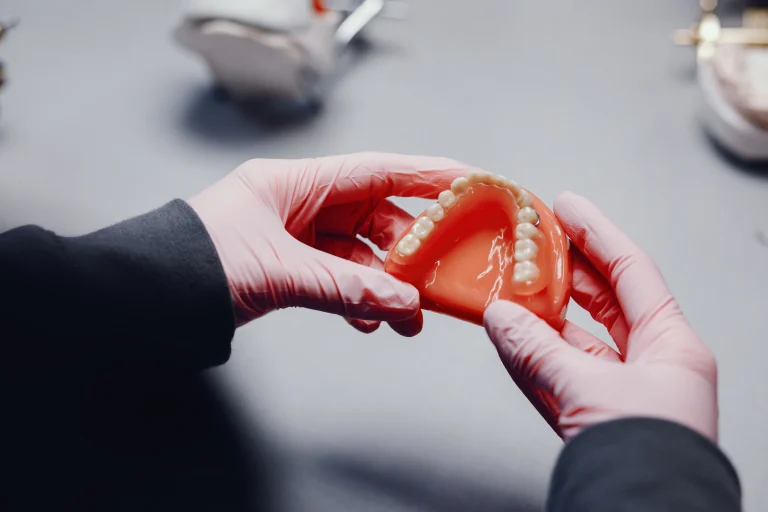
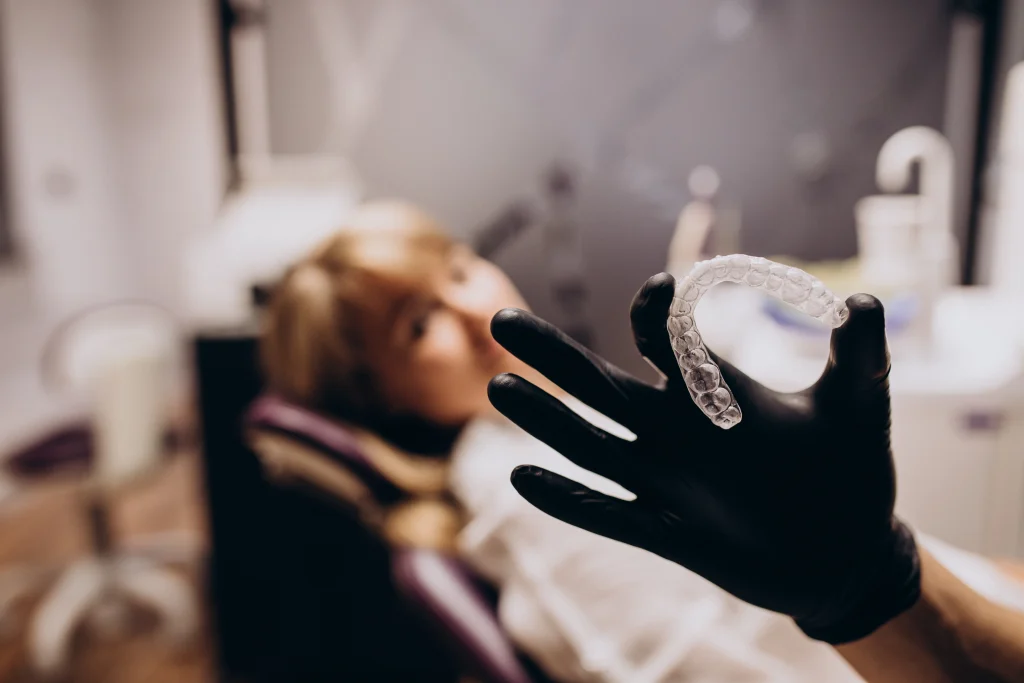
Night guards and occlusal splints are removable dental appliances designed for different clinical needs, including protecting teeth from grinding and managing selected occlusal or muscle-related conditions. The appropriate appliance depends on the diagnosis, bruxism severity, bite, patient comfort and the restorations that need protection.
Hard acrylic guards are commonly considered for patients who grind heavily, soft guards may suit selected mild or short-term cases, and dual-laminate guards combine a softer inner surface with a harder outer layer. A clear prescription, accurate scan or impression, and reliable bite record help the dental laboratory fabricate an appliance suited to the case.
Key takeaways
- Night guards can help protect teeth and restorations from the effects of grinding and clenching, but they do not cure bruxism.
- Hard, soft and dual-laminate appliances differ in comfort, durability and adjustability.
- The appliance design should reflect the clinical diagnosis rather than material preference alone.
- Accurate scans or impressions, opposing-arch records and a reliable bite record are important for fabrication.
- A review appointment helps identify fit problems, pressure points and occlusal discrepancies.
What Is a Night Guard?
A night guard is a removable occlusal appliance, usually designed for one dental arch, that creates a protective surface between the upper and lower teeth. It may help reduce tooth wear and protect existing restorations from some of the forces associated with grinding and clenching.
Night guards manage some consequences of bruxism rather than eliminating its underlying causes. Bruxism can have multiple contributing factors, so the appliance should form part of an appropriate clinical assessment and management plan.
Night Guard vs Occlusal Splint: What Is the Difference?
different appliance designs.
A night guard generally refers to a protective appliance worn during sleep to reduce the effects of tooth grinding or clenching.
An occlusal splint is a broader term for an appliance designed according to a particular clinical purpose and occlusal scheme. Depending on the diagnosis, this may include a stabilisation splint used in the management of selected temporomandibular or muscle-related conditions.
If you are prescribing an appliance for jaw pain, muscle symptoms or temporomandibular joint (TMJ) concerns rather than straightforward tooth-wear protection, document the clinical objective and required design clearly. Appliance selection should follow the diagnosis and appropriate clinical assessment.
Types of Night Guards: Comparison Chart
| Feature | Hard acrylic | Soft or resilient | Dual-laminate |
|---|---|---|---|
| Structure | Rigid acrylic or another suitable hard material | Flexible thermoplastic or resilient material | Soft inner layer with a harder outer layer |
| Typical thickness | Approximately 1.5–3 mm | Approximately 1–3 mm | Approximately 2–3 mm combined |
| Initial comfort | May require an adjustment period | Often comfortable initially | Combines a softer fit surface with a firmer exterior |
| Durability | Generally good, depending on design and use | May wear or tear more quickly | Depends on layer bonding, materials and use |
| Heavy grinding | Commonly considered | May be less suitable in some cases | May be considered where comfort is also important |
| Adjustability | Often suitable for adjustment and polishing | More limited, depending on material | Depends on the hard layer and construction |
| Common applications | Selected bruxism cases and stabilisation splints | Selected mild or short-term cases | Selected cases where a combination of comfort and resistance is desired |
| Fabrication | May be processed conventionally, milled or printed using suitable materials | Often thermoformed or otherwise processed according to the material | Fabricated using a compatible layered process |
Thickness values are approximate and vary by appliance design and material. Confirm the requirements for the specific product and fabrication method.
1. Hard Acrylic Night Guards
A hard acrylic guard is a rigid appliance that can provide a stable occlusal surface and can often be adjusted and polished to achieve the intended fit and contact pattern.
Advantages
- Durable when appropriately designed, fabricated and maintained.
- Can be adjusted to refine fit and occlusal contacts.
- Provides a firm surface for managing tooth contact during use.
- May be suitable for selected patients with significant grinding or clenching.
Limitations
- May feel bulky or unfamiliar at first.
- Requires accurate fabrication and appropriate adjustment.
- Poor fit or uncorrected high spots may cause discomfort.
- Requires clinical review to confirm that the appliance remains suitable.
Common applications: selected bruxism cases, protective appliances for patients with restorations, and stabilisation splints when clinically indicated.
Hard acrylic should not automatically be prescribed for every patient with jaw pain or TMJ symptoms. The design and treatment objective should be based on the diagnosis.
2. Soft Night Guards
A soft night guard is a flexible appliance that may feel more comfortable to some patients, particularly when first wearing an appliance.
Advantages
- Flexible material may improve initial comfort for some patients.
- Can be useful in selected mild or short-term situations.
- May be considered when a patient has difficulty adapting to a rigid appliance.
Limitations
- May wear, deform or tear more quickly, depending on the material and the patient’s habits.
- Can be harder to adjust precisely than a rigid appliance.
- May not be the best choice for every patient with heavy grinding or clenching.
- Requires monitoring for wear, fit and patient response.
Common applications: selected mild bruxism cases, short-term protection and patients for whom a soft appliance is clinically appropriate.
A soft appliance should not be considered universally better simply because it feels comfortable. The clinician should assess the patient’s grinding pattern, symptoms, occlusion and appliance requirements.
3. Dual-Laminate Night Guards
A dual-laminate night guard combines a softer inner layer with a harder outer layer. Its design aims to balance comfort against the greater resistance that a firmer external surface can provide.
Advantages
- Softer inner surface may help with comfort and retention.
- Harder outer layer can provide more resistance than a fully soft appliance, depending on construction.
- May be considered for selected patients who find a fully rigid appliance difficult to tolerate.
Limitations
- Layer thickness and bonding must be appropriate for the design.
- Fabrication quality affects durability and fit.
- The combined structure may be thicker than some single-layer alternatives.
- Suitability depends on the patient’s clinical requirements and the specific material system.
Common applications: selected patients with moderate or heavy grinding who may benefit from a combination of a softer fit surface and a firmer external layer.
Digital vs Conventional Night Guard Fabrication
Night guards may be fabricated using conventional or digital workflows. The appropriate method depends on the appliance material, available equipment, required design and the dental laboratory’s validated process.
| Approach | How it works | Points to consider |
|---|---|---|
| Conventional fabrication | Physical impressions, models and a suitable forming or processing technique | Accuracy depends on impression quality, model accuracy and processing |
| Digital fabrication | Intraoral or model scan, digital design, and suitable milling or 3D-printing processes | Requires compatible materials, validated equipment and an appropriate design workflow |
Digital records may make replacement fabrication more convenient when the patient’s teeth and restorations have not changed. A stored file should not automatically be reused without checking whether the existing record remains suitable for the new appliance.
For clinics using digital workflows, accurate scanning and clear case instructions remain important. Read our guide to the hybrid dental workflow for more information about combining clinical scanning with laboratory manufacturing.
Which Night Guard Should You Prescribe?
The following table provides a starting point for discussion, not a universal prescribing rule.
| Clinical situation | Appliance that may be considered |
|---|---|
| Confirmed heavy grinding or clenching | Hard acrylic or a suitable dual-laminate design |
| New crowns, veneers or implant restorations that need protection | A suitable protective appliance, often a hard design when clinically indicated |
| Mild grinding or a first-time wearer | Soft or hard appliance, depending on the clinical assessment and tolerance |
| TMJ or muscle-related symptoms | An appropriately designed appliance following diagnosis and clinical assessment |
| Short-term protection in a selected case | A suitable soft or hard appliance, depending on the indication |
| Patient has difficulty tolerating a rigid appliance | Consider alternatives, including a suitable dual-laminate design, after assessment |
The final choice should account for the patient’s symptoms, wear pattern, bite, existing restorations, comfort and treatment goals. Review the fit and response after delivery and adjust the treatment plan when needed.
Should You Choose an Upper or Lower Night Guard?
There is no single arch choice that is correct for every patient.
An upper appliance may be selected when it offers appropriate retention, stability and occlusal design. A lower appliance may be considered in selected cases where anatomy, retention, patient comfort or other clinical factors favour it.
The choice should account for the patient’s dental anatomy, existing restorations, retention, occlusion and tolerance. Record the required arch clearly on the prescription and explain any relevant design considerations to the laboratory.
What Does the Dental Laboratory Need From You?
A complete prescription helps the laboratory understand the appliance requirements and reduces avoidable clarification.
Before submitting a case, include the following:
- Accurate scan or impression: Provide the complete arch that will carry the appliance, with sufficient tooth detail and the relevant palatal or lingual anatomy.
- Opposing arch record: Include the opposing arch so the appliance can be designed in relation to the patient’s occlusion.
- Bite record: Supply a reliable, repeatable bite record in the position required for the intended appliance.
- Appliance type and arch: Specify hard, soft or dual-laminate, and whether the appliance is for the upper or lower arch.
- Clinical notes: Document the relevant grinding or clenching history, symptoms, existing crowns or implants, and any design or thickness restrictions.
- Patient-specific considerations: Mention factors such as a strong gag reflex, previous appliance breakage or difficulty tolerating an earlier guard.
For a broader checklist, see our dental case submission guide.
Common Mistakes When Prescribing Night Guards
| Common mistake | Possible consequence | Better approach |
|---|---|---|
| Selecting an appliance without assessing grinding severity | The appliance may not suit the patient’s needs | Match the design to the clinical assessment |
| Sending an inaccurate bite record | Poor contacts, discomfort or additional adjustments | Record the bite carefully and check it before submission |
| Sending a scan or impression with missing details | Poor fit or the need to repeat records | Inspect the records and rescan or retake the impression if necessary |
| Omitting existing crowns or implants from the prescription | Important design considerations may be missed | Document relevant restorations and clinical notes |
| Skipping the post-delivery review | Fit problems or wear may go unnoticed | Arrange an appropriate review and check fit and occlusion |
| Not providing care instructions | The appliance may be damaged or inadequately maintained | Explain cleaning, storage and when to seek review |
Patient Care Instructions for Night Guards
Give patients clear, practical instructions when delivering a night guard.
- Clean the appliance according to the material and manufacturer’s instructions. A soft brush and mild soap may be suitable for some appliances.
- Avoid hot water, which can deform certain materials.
- Store the appliance in a suitable case and protect it from heat and pets.
- Bring the appliance to follow-up appointments so its fit and wear can be checked.
- Contact the clinic if the appliance cracks, becomes loose, stops fitting properly or causes persistent discomfort.
- Report new or worsening jaw pain, changes in the bite or other concerning symptoms.
Cleaning products and methods can vary by appliance material, so avoid recommending harsh chemicals or cleaning agents that may damage the device.
Working With YES Dental
YES Dental supplies dental restoration products to dentists and clinics, including night guards as part of its product offering. Clear communication about the appliance type, arch, clinical requirements and existing restorations helps the team understand the case.
When submitting a case, include the required scan or impression, opposing arch, bite record and prescription notes. If you are unsure which appliance design is suitable, discuss the case with the dental team in line with your clinical assessment.
Explore the YES Dental dental products range, review the implant restorations guide for related restoration considerations, or contact YES Dental to discuss your requirements.
You can submit a case through the YES Dental portal or contact the team through WhatsApp.
Conclusion
Choosing a night guard or occlusal splint requires consideration of the clinical diagnosis, grinding severity, patient comfort, appliance material and the restorations that need protection. Hard acrylic, soft and dual-laminate designs each have potential uses and limitations, so no single option is suitable for every patient.
Provide an accurate scan or impression, a reliable bite record and a clear prescription. Confirm the appliance design with the laboratory when needed, give patients appropriate care instructions and arrange a follow-up review to assess fit, comfort and function.
Frequently Asked Questions
1. What is the difference between a night guard and an occlusal splint?
A night guard generally refers to a protective appliance used to reduce the effects of grinding and clenching. Occlusal splint is a broader term that may include appliances designed for specific occlusal, muscle-related or temporomandibular conditions.
2. Which night guard is best for bruxism?
Hard acrylic and suitable dual-laminate appliances are commonly considered for patients with significant grinding. The right choice depends on the clinical assessment, occlusion, appliance design and patient tolerance.
3. Are soft night guards a bad choice?
Not necessarily. Soft guards may suit selected mild or short-term cases and can feel comfortable to some patients. However, they may wear more quickly and may not be suitable for every patient with heavy grinding. Selection should be based on clinical needs.
4. How long does a night guard last?
There is no single lifespan for every night guard. Longevity depends on material, fabrication, grinding forces, care and changes in the patient’s teeth or restorations. Check the appliance regularly and arrange replacement when it becomes damaged, worn, loose or unsuitable.
5. Can a night guard protect crowns and implants?
A suitable night guard may help protect teeth and restorations from some effects of grinding and clenching. It does not eliminate bruxism, and the appliance should be selected and reviewed according to the patient’s clinical needs.