
A zirconia crown is a tooth-colored dental restoration made from zirconium dioxide ceramic, widely used to restore damaged, weakened, or heavily restored teeth. Dental zirconia is valued for its strength and versatility, making it a commonly used material for different types of dental crowns. Zirconia crowns are known for their combination of strength, durability, and natural-looking appearance.
With different zirconia materials now available, these crowns can be produced with different balances of strength and translucency. They are used for both anterior and posterior restorations, depending on the clinical requirements and treatment plan.
For dental professionals and dental laboratories, understanding the different types of zirconia crowns, their applications, and their key characteristics can help when selecting an appropriate restoration.
What Is a Zirconia Crown?
A zirconia crown is a full-coverage dental restoration made from zirconium dioxide ceramic. It is designed to cover and restore a prepared tooth.
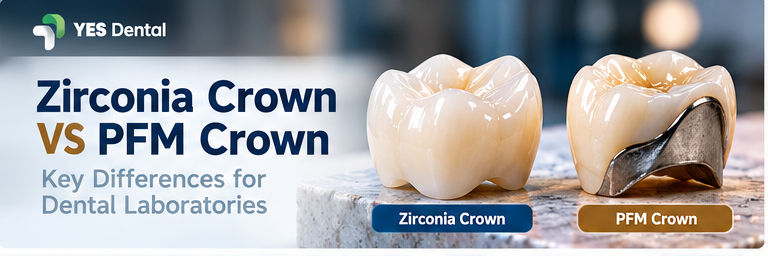
Unlike a porcelain-fused-to-metal (PFM) crown, zirconia does not require a conventional metal framework. This makes zirconia an option when a metal-free restoration is preferred.
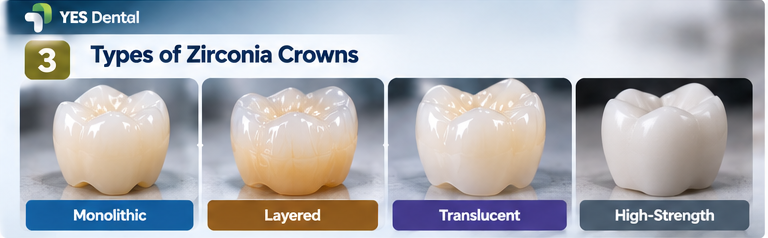
Zirconia crowns are available in different forms, including:
- Monolithic zirconia crowns
- Layered zirconia crowns
- Translucent zirconia crowns
- High-strength zirconia crowns
The appropriate type depends on factors such as tooth location, functional requirements, aesthetic expectations, available space, and the dentist’s treatment plan.
Benefits of Zirconia Crowns
1. Metal-Free Construction
One of the main characteristics of zirconia crowns is that they are ceramic restorations without a conventional metal framework.
This makes zirconia suitable for cases where a metal-free restoration is preferred.
2. Strength and Durability
Zirconia is known for its high mechanical strength compared with many traditional ceramic materials.
This characteristic makes zirconia useful for different restorative applications, including posterior crowns where functional forces can be significant.
However, the performance of a restoration depends on several factors, including the specific zirconia material, restoration design, manufacturing quality, preparation, occlusion, and clinical conditions.
3. Natural-Looking Appearance
Modern zirconia materials offer improved translucency and optical properties compared with earlier generations.
Depending on the material selected and the finishing process, zirconia crowns can provide a natural-looking appearance.
For highly aesthetic cases, factors such as shade, translucency, surface texture, and characterization should also be considered.
4. Digital Manufacturing Compatibility
Zirconia works well with modern CAD/CAM manufacturing processes.
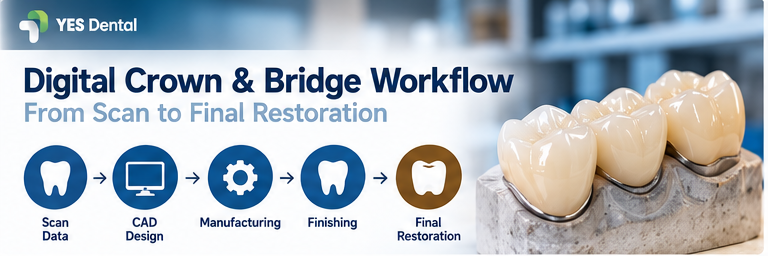
A typical zirconia restoration workflow can involve:
Digital Case Data → Design → Milling → Sintering → Finishing → Quality Control
This makes zirconia a practical option for dental laboratories working with digital restoration production.
Types of Zirconia Crowns
Monolithic Zirconia Crown
A monolithic zirconia crown is manufactured primarily from a single zirconia material without a separate porcelain veneering layer.
This approach can provide a combination of strength and a relatively streamlined manufacturing process.
Monolithic zirconia crowns are commonly considered for posterior restorations and cases where functional performance is an important consideration.
Layered Zirconia Crowns
Layered zirconia crowns consist of a zirconia substructure with an additional ceramic layer.
The external ceramic can provide additional aesthetic characterization and may be considered for cases where appearance is a major consideration.
Translucent Zirconia Crowns
Translucent zirconia materials are designed to allow greater light transmission than some traditional high-strength zirconia materials.
They can provide a balance between strength and aesthetics, although the exact characteristics depend on the specific material.
High-Strength Zirconia
High-strength zirconia focuses more heavily on mechanical performance.
These materials may be considered when functional demands are particularly important. Material selection should always take the specific restoration and clinical requirements into account.
Where Are Zirconia Crowns Used?
Zirconia crowns can be used for a variety of restorative situations, including:
- Anterior crowns
- Posterior crowns
- Single-unit crowns
- Multi-unit crown and bridge cases
- Full-coverage restorations
- Implant-supported restorations
The suitability of zirconia depends on the individual case and should be determined by the treating dental professional.
Limitations of Zirconia Crowns
Zirconia crowns offer strength and versatility, but their suitability depends on the material and clinical requirements.
- Aesthetics: Some zirconia materials are less translucent than glass ceramics.
- Veneering complications: Layered zirconia crowns may experience ceramic chipping.
- Opposing tooth wear: Proper finishing and polishing help reduce wear on opposing teeth.
- Case selection: Bite forces, available space, restoration type and aesthetic needs influence material choice.
Monolithic vs Layered Zirconia Crowns
| Factor | Monolithic Zirconia | Layered Zirconia |
|---|---|---|
| Construction | Primarily one zirconia material | Zirconia with a ceramic veneer |
| Main advantage | Avoids veneering-layer complications | Offers additional aesthetic characterization |
| Limitation | Appearance varies by material | Veneering ceramic may chip |
| Selection | Based on functional and aesthetic needs | Based on functional and aesthetic needs |
The appropriate option depends on the clinical situation, material properties and aesthetic requirements.
Are Zirconia Crowns Suitable for Dental Bridges?
Yes. Zirconia is used for both single crowns and multi-unit dental bridges. Suitability depends on several factors:
- Bridge span and connectors: Influence structural requirements.
- Bite forces: Affect material and design selection.
- Material specifications: Different zirconia formulations have different properties.
- Aesthetic requirements: Depend on the location and appearance needed.
Zirconia is used for both single crowns and multi-unit bridge restorations. Dental professionals looking for restoration options can explore our crown and bridge restorations to learn more about the available products.
Zirconia Crown vs PFM Crown
Zirconia and PFM crowns are both established restorative options, but their material structures are different.
| Feature | Zirconia Crown | PFM Crown |
|---|---|---|
| Main structure | Zirconium dioxide ceramic | Metal framework + porcelain |
| Metal-free | Yes | No |
| Digital manufacturing | Commonly used | Can be digitally integrated |
| Appearance | Depends on zirconia type | Depends on porcelain layering |
| Strength | Generally high | Established restorative option |
| Production | Milling + sintering | Metal framework + porcelain |
Neither option is automatically best for every case. The appropriate restoration depends on the clinical requirements, location, functional demands, aesthetic expectations, material properties, and treatment plan.
How to Choose the Right Zirconia Crown
Several factors can influence the selection of a zirconia crown.
Tooth location: Anterior and posterior teeth may have different functional and aesthetic requirements.
Functional load: The expected forces on the restoration can influence material selection.
Aesthetic requirements: Translucency, shade, surface characteristics, and characterization can be particularly important for visible teeth.
Available space: The preparation and available restorative space can affect restoration selection.
Restoration type: A single crown may have different requirements from a bridge or implant-supported restoration.
Material characteristics: Different zirconia materials offer different balances of strength and optical properties.
How YES Dental Can Help With Zirconia Restorations
Choosing the right restoration is only one part of the process. Consistent manufacturing, finishing, quality control, and case-specific requirements also matter when sourcing dental restorations.
YES Dental provides dental restoration products for dental professionals and clinics looking for zirconia crown and bridge solutions. The available options can be explored according to the restoration requirements of each case.
YES Dental provides zirconia crown and bridge restoration solutions as part of its dental restoration product range. The focus is on producing restorations according to the requirements of each case while maintaining a structured manufacturing and quality-control process.
Whether you require a single zirconia crown, multiple-unit restoration, or a broader crown and bridge requirement, working with a dedicated dental restoration provider can help simplify procurement and maintain consistency across cases.
You can explore YES Dental’s dental restoration products to see the available restoration solutions.
How Are Zirconia Crowns Manufactured?
Modern zirconia crown production commonly uses a digital manufacturing process.
After the restoration has been planned and designed, the crown can be milled from a zirconia blank. Depending on the material and production workflow, the process may include:
Milling → Sintering → Finishing → Characterization → Final Quality Control
During final QC, the restoration may be checked for anatomy, contacts, margins, surface quality, shade, and overall manufacturing requirements.
A structured quality-control process is important because the final result depends not only on the zirconia material but also on manufacturing accuracy and finishing.
Conclusion
Zirconia crowns have become an important option in modern restorative dentistry because they combine metal-free construction, strength, aesthetics, and compatibility with modern manufacturing workflows.
Different zirconia types can offer different balances of mechanical and optical properties. Therefore, the appropriate option should be selected according to the clinical situation, restoration requirements, and professional treatment plan.
For dental professionals and laboratories looking for a reliable restoration partner, YES Dental can help with zirconia crown and bridge restoration requirements through its dental products and manufacturing capabilities.
Frequently Asked Questions
1. Are zirconia crowns metal-free?
Yes. Zirconia crowns are made from zirconium dioxide ceramic and do not use the conventional metal framework found in PFM crowns.
2. Are zirconia crowns strong?
Zirconia is known for its high mechanical strength. However, restoration performance also depends on the specific material, design, manufacturing process, preparation, occlusion, and clinical conditions.
3. Are zirconia crowns suitable for front teeth?
They can be used for anterior restorations when an appropriate zirconia material and suitable aesthetic characterization are selected. The final choice depends on the individual case and treatment requirements.
4. What is the difference between monolithic and layered zirconia?
Monolithic zirconia crowns are primarily made from a single zirconia material, while layered zirconia crowns have a zirconia substructure with an additional ceramic layer. The choice depends on the required balance between functional performance and aesthetics.
5. Does YES Dental provide zirconia crowns?
Yes. YES Dental provides zirconia crown and bridge restoration solutions as part of its dental restoration product range. Requirements can be discussed according to the specific restoration and case needs.