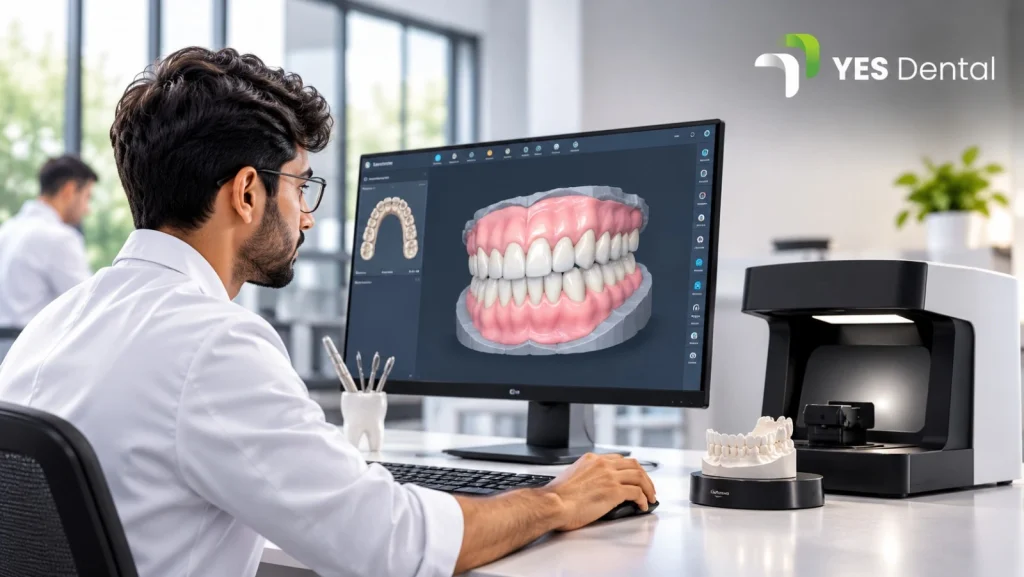
Dental laboratories are increasingly adopting digital workflows to manage restoration design, improve case coordination and meet changing production requirements. However, managing every CAD design requirement in-house can become challenging when case volumes increase, experienced designers are unavailable or specialized restoration cases require additional expertise.
Dental CAD outsourcing offers an alternative by allowing laboratories to work with an external dental CAD design team. Instead of handling every digital design internally, a laboratory can share its scan files, prescriptions and design instructions with an outsourcing partner and receive completed digital designs for review and manufacturing.
This approach can help dental laboratories access additional design capacity without necessarily expanding their in-house CAD team.
In this guide, we explain what dental CAD outsourcing involves, its benefits, how the process works, what it may cost and what to consider when selecting a dental CAD design partner.
What Is Dental CAD Outsourcing?
Dental CAD outsourcing is the process of sending digital dental case files and restoration requirements to an external CAD design team that prepares the required restoration designs using specialized dental software.
The outsourcing provider works from the digital scans, prescriptions and instructions supplied by the dental laboratory. Once the design is completed, the files are returned to the laboratory for review, approval and subsequent manufacturing.
A typical outsourced dental CAD workflow involves:
- The dental laboratory prepares the digital case files.
- The laboratory submits the scans and design instructions to an external CAD team.
- The CAD designer prepares the restoration design.
- The completed design is reviewed according to the agreed quality-control process.
- The final design files are delivered to the laboratory.
- The laboratory proceeds with milling, printing or other manufacturing processes.
Dental CAD outsourcing is primarily a design-support arrangement. The dental laboratory generally retains responsibility for manufacturing, finishing and its own final quality-control procedures unless a wider manufacturing arrangement has been agreed.
Why Are Dental Laboratories Outsourcing CAD Design?
Dental laboratories need to balance incoming cases, available technicians, production capacity and delivery commitments. When the volume of digital design work increases, CAD design can become a bottleneck in the overall workflow.
Several operational challenges encourage laboratories to consider outsourcing.
1. Increasing CAD Design Workloads
A laboratory may experience fluctuations in incoming cases. During busy periods, its existing CAD designers may struggle to complete every case within the required schedule.
Outsourcing provides access to additional design capacity when the internal team needs support.
2. Difficulty Finding Experienced CAD Designers
Dental CAD design requires knowledge of dental anatomy, restoration requirements, digital workflows and specialized software.
Finding and retaining experienced designers can take time. Working with an external CAD design provider gives laboratories another way to access design support without immediately recruiting additional permanent staff.
3. Managing Operating Costs
Maintaining an in-house CAD department involves more than paying employee salaries.
Depending on the laboratory, expenses may include:
- CAD software licences
- High-performance computer workstations
- Employee salaries and benefits
- Training and skill development
- Software maintenance
- Hardware upgrades
- Recruitment and onboarding
Outsourcing changes the cost structure because the laboratory pays for the design services it uses according to the agreed pricing arrangement.
However, the actual financial benefit depends on case volume, complexity, outsourcing rates and the laboratory’s existing resources.
4. Handling Specialized Restoration Cases
Not every laboratory has the same level of experience across all restoration categories.
Some cases require specialized design knowledge, such as implant restorations, full-arch frameworks or telescopic restorations.
An external CAD design partner can provide additional support for these requirements, depending on its available expertise and capabilities.
5. Maintaining Production Workflow Flexibility
A laboratory may have sufficient milling and finishing capacity but limited CAD design resources.
Outsourcing can help address this imbalance by providing additional digital design support without requiring the laboratory to change its entire production setup.
What Are the Benefits of Outsourcing Dental CAD Design?
Dental CAD design outsourcing can provide several operational advantages when the service is matched to the laboratory’s requirements.
1. Additional Design Capacity Without Hiring
One of the main advantages of outsourcing is access to additional CAD design resources.
Laboratories can send selected cases to an external design team instead of increasing their permanent workforce every time the workload grows.
This can be particularly useful during:
- Seasonal increases in case volume
- Staff shortages
- Employee leave periods
- Large case submissions
- Temporary production backlogs
2. Flexible Cost Management
An in-house CAD department generally requires ongoing investment in people, software and equipment.
With an outsourcing arrangement, laboratories can use external design services based on their actual requirements.
For laboratories with fluctuating workloads, this can provide greater flexibility in managing design-related expenditure.
Before choosing a provider, compare the complete cost of outsourcing with your existing in-house operating expenses rather than considering only the per-case design price.
3. Access to Dental CAD Software Expertise
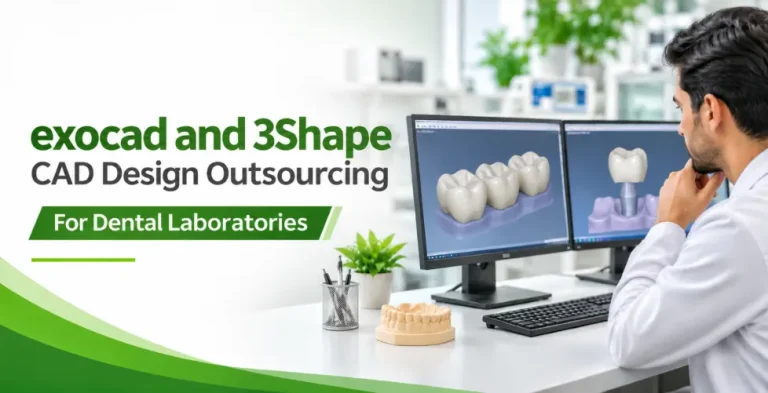
External CAD design teams may work with specialized software platforms such as Exocad and 3Shape.
This allows laboratories to collaborate with designers who are familiar with digital restoration workflows and different case requirements.
The laboratory should always confirm software compatibility, supported restoration types and required output formats before starting a partnership.
4. Support for Multiple Restoration Types
Dental CAD outsourcing can support different restoration categories, depending on the provider’s expertise.
These may include:
- Crown and bridge designs
- Zirconia restoration designs
- Implant-supported restorations
- Custom abutment designs
- Full-arch and All-on-X designs
- Removable partial denture frameworks
- Telescope restorations
- Night guards and occlusal splints
Having access to multiple design capabilities can help laboratories manage different types of digital cases through an external design partner.
5. Better Workload Distribution
Outsourcing allows a laboratory to distribute digital design work between its internal team and an external provider.
For example, the in-house team may focus on regular cases and complex cases that require direct internal coordination, while selected overflow cases are assigned to the outsourcing partner.
This arrangement can help laboratories organize their workloads more effectively.
6. More Time to Focus on Core Laboratory Operations
Dental laboratory owners and managers need to coordinate several activities, including case management, manufacturing, finishing, quality control and client communication.
When additional CAD design work is handled externally, the internal team may have more time to focus on other important operational responsibilities.
The extent of this benefit depends on how effectively the outsourcing workflow is integrated into the laboratory’s existing processes.
In-House vs Outsourced Dental CAD Design: What Is the Difference?
Both approaches can support a dental laboratory’s digital workflow. The right choice depends on case volume, available expertise, operating costs and the level of control required.
| Comparison Factor | In-House CAD Design | Outsourced CAD Design |
|---|---|---|
| Design team | Internal employees | External design team |
| Hiring | Requires recruitment | No direct recruitment required |
| Software investment | Managed by the laboratory | Generally managed by the provider |
| Workload capacity | Depends on internal resources | Can provide additional design capacity |
| Cost structure | Salaries and operating expenses | Agreed per-case or contract pricing |
| Design coordination | Direct internal communication | Requires a defined communication process |
| Scalability | May require additional staff and resources | Can be adjusted according to provider capacity |
| Quality control | Managed internally | Requires an agreed review and approval process |
| Workflow control | Direct internal oversight | Shared between laboratory and provider |
Which option is better?
In-house CAD design may be suitable for laboratories with consistent design volumes, an established team and a preference for direct internal control.
Outsourced CAD design may be more suitable for laboratories that experience fluctuating workloads, need additional design capacity or want access to external CAD expertise.
Some laboratories use a hybrid approach, combining an internal design team with external CAD support when required.
Which Dental CAD Services Can Be Outsourced?
The types of services available depend on the design provider’s software, expertise and technical capabilities.
Common outsourced dental CAD design services include:
1. Crown and Bridge CAD Design
Crown and bridge design is one of the common applications of dental CAD software.
The digital design process may involve:
- Single-unit crown design
- Multi-unit bridge design
- Full-contour restoration design
- Coping design
- Pontic design
- Proximal contact adjustments
- Occlusal considerations
The final design should follow the laboratory’s prescription, material requirements and manufacturing specifications.
2. Implant CAD Design
Implant restorations require case-specific information, including implant system details, scan body information and restoration requirements.
Depending on the provider’s capabilities, outsourced implant CAD design may include:
- Implant crowns
- Implant bridges
- Custom abutments
- Screw-retained restorations
- Implant-supported frameworks
Clear implant information and compatible digital libraries are important for the design workflow.
3. Full Arch / All-on-X Design
Full-arch implant restorations involve several interconnected design considerations.
These may include:
- Arch form
- Tooth arrangement
- Implant positions
- Prosthetic space
- Occlusal requirements
- Framework design
Laboratories handling complex implant cases may use external CAD design support when additional design resources are required.
4. Removable Partial Denture Design
Digital CAD workflows can also support removable restorations.
Depending on the case and provider’s capabilities, these services may include:
- Removable partial denture frameworks
- Denture-related digital designs
- Component positioning
- Framework design considerations
5. Telescope and Attachment Design
Telescope restorations involve multiple components that must be designed according to the prescribed restoration requirements.
External CAD design support may help laboratories manage these cases when specialized digital design assistance is needed.
6. Night Guard CAD Design
Digital night guard design involves creating an appliance based on the supplied scan data and prescribed requirements.
The design should account for the intended appliance type, fit requirements and laboratory manufacturing process.
How Does the Dental CAD Outsourcing Process Work?
A structured workflow helps laboratories communicate their requirements and manage outsourced cases efficiently.
Here is a typical process followed when working with a dental CAD outsourcing provider.
Step 1: Prepare the Digital Case Files
The laboratory prepares the required digital files and case information.
Depending on the restoration, this may include:
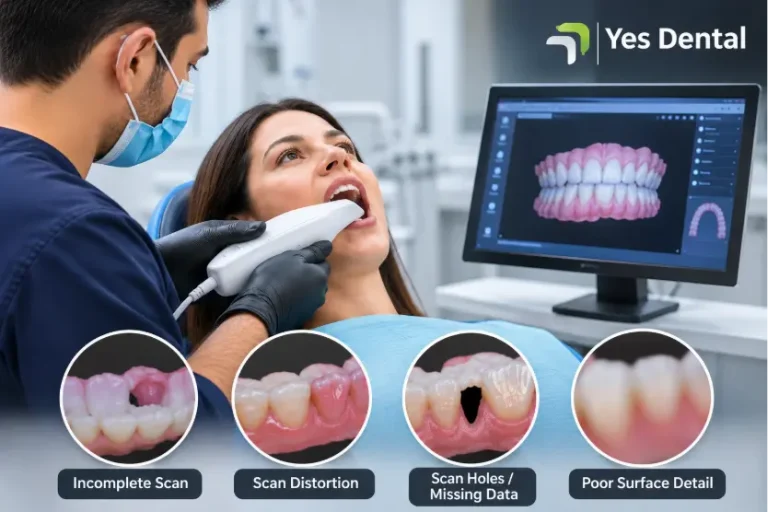
- Upper arch scan
- Lower arch scan
- Preparation scan
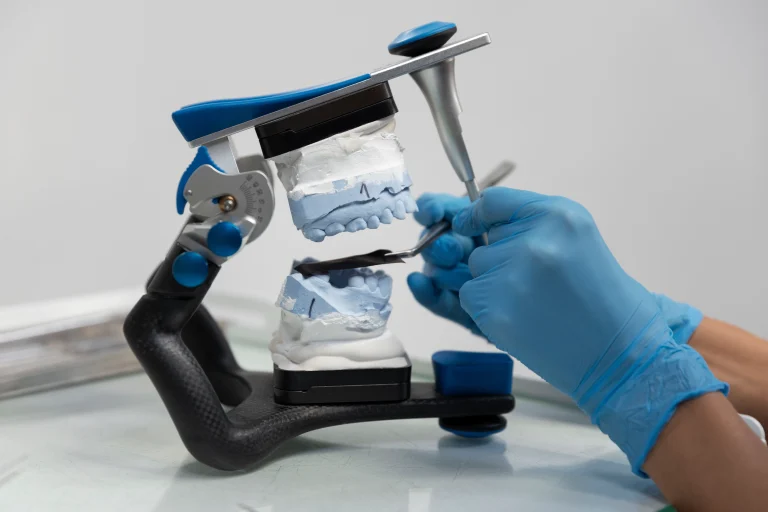
- Bite registration
- Implant scan body information
- Restoration prescription
- Material specifications
- Shade details
- Additional design instructions
The exact requirements vary depending on the restoration type.
Step 2: Submit the Case to the CAD Design Partner
The laboratory sends the digital files and instructions through the provider’s agreed submission method, such as a dedicated case portal or file-sharing system.
A properly organized submission helps the design team understand the requirements.
Step 3: Case Review and CAD Design
The design team reviews the submitted files and case instructions.
The designer prepares the restoration using the supported CAD software and follows the agreed laboratory preferences and design requirements.
If essential information is missing or unclear, the provider should communicate with the laboratory before proceeding.
Step 4: Design Review and Quality Checks
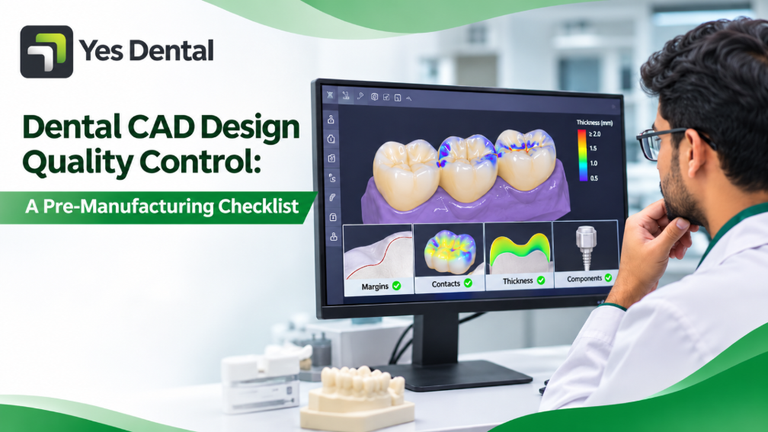
Once the design is prepared, it should be reviewed according to the agreed quality-control process.
Depending on the restoration, relevant checks may include:
- Preparation margins
- Tooth anatomy
- Proximal contacts
- Occlusion
- Emergence profile
- Restoration positioning
- Manufacturing requirements
The laboratory should also review the design before approving it for production.
Step 5: Final Design File Delivery
After the design is completed and the review process is finished, the final digital files are delivered to the laboratory.
The files can then be used in the laboratory’s compatible manufacturing workflow, subject to the required software and equipment compatibility.
Step 6: Manufacturing and Finishing
The laboratory proceeds with the next stage of production.
Depending on the material and restoration, this may involve milling, 3D printing, sintering, casting, finishing, polishing or other laboratory processes.
A clear separation between CAD design responsibilities and manufacturing responsibilities helps avoid confusion during outsourcing.
What Files Are Required for Dental CAD Outsourcing?
Providing complete digital case information is important for a smooth outsourcing workflow.
The exact files depend on the restoration type, but a typical submission may include:
| File / Information | Purpose |
|---|---|
| Preparation scan | Provides the prepared tooth information |
| Upper arch scan | Shows the opposing or supporting arch |
| Lower arch scan | Provides additional arch information |
| Bite registration | Helps establish the occlusal relationship |
| Implant scan body data | Supports implant-related design |
| Prescription | Defines the required restoration |
| Material details | Specifies the intended material |
| Shade information | Provides restoration shade requirements |
| Design instructions | Explains specific laboratory preferences |
Common digital scan formats include STL and other formats supported by the laboratory and CAD provider.
For implant cases, the laboratory should also provide the implant system, platform details and relevant scan body information.
Before submitting a case, confirm that the files are complete, readable and compatible with the design provider’s workflow.
How Much Does Dental CAD Outsourcing Cost?
The cost of dental CAD outsourcing varies according to several factors.
There is no single standard price applicable to every dental laboratory or restoration type.
Common pricing models include:
1. Per-Unit Pricing
The laboratory pays for each individual restoration design.
This may be suitable for laboratories that outsource selected cases or have variable workloads.
2. Per-Case Pricing
The provider charges according to the complexity and requirements of the complete case.
This may be suitable for multi-unit restorations or more complex design work.
3. Dedicated Designer or Monthly Agreements
Some providers offer ongoing arrangements for laboratories with regular CAD design requirements.
Pricing may depend on the agreed workload, design scope and service expectations.
Factors That Affect Outsourcing Costs
Before comparing providers, consider:
- Type of restoration
- Number of units
- Case complexity
- Implant-related requirements
- Design software compatibility
- Revision policy
- Turnaround expectations
- Monthly case volume
- Additional design requirements
A useful tip: Compare the total cost of managing CAD design internally with the complete outsourcing cost. Include software, equipment, staffing, training and operational expenses in your comparison.
How to Choose the Right Dental CAD Outsourcing Partner
Choosing a suitable outsourcing provider is an important decision because the quality of digital designs and the reliability of communication can affect your laboratory workflow.
Consider the following factors before selecting a partner.
1. Experience With Different Restoration Types
Check whether the provider has experience with the restoration categories your laboratory regularly handles.
Ask about crown and bridge, implant, full-arch, removable and other specialized design capabilities.
2. CAD Software Compatibility
Confirm which software platforms the provider uses.
For example, laboratories working with Exocad or 3Shape should verify that the outsourcing partner can deliver files compatible with their existing workflow.
3. Design Quality and Review Process
Ask how the provider checks completed designs.
Understand whether its process includes review of margins, contacts, occlusion, anatomy and other relevant design requirements.
4. Communication and Case Management
A reliable outsourcing relationship requires clear communication.
Check how the provider handles:
- New case submissions
- Missing information
- Design instructions
- Revision requests
- Case status updates
- Final file delivery
5. Turnaround Time
Ask for the standard turnaround time for different restoration types.
Also clarify when the turnaround clock starts, how complex cases are handled and whether revisions affect the delivery schedule.
6. Data Confidentiality
Dental case information may contain sensitive patient-related data.
Ask the provider about its file access controls, storage practices, data handling procedures and confidentiality arrangements.
Ensure that your laboratory follows applicable privacy and data-protection requirements when sharing case information.
7. Ability to Support Future Growth
Your outsourcing requirements may change as your laboratory grows.
Consider whether the provider has the capacity and technical expertise to support your expected case volume and restoration requirements.
Is Dental CAD Outsourcing Right for Your Laboratory?
Dental CAD outsourcing may be worth considering if your laboratory faces any of the following situations:
- Your internal CAD team regularly experiences workload pressure.
- You receive more digital cases than your existing designers can manage.
- You need additional design expertise for specialized restorations.
- Recruiting and training new CAD designers is becoming difficult.
- You want to evaluate an alternative to expanding your in-house design department.
- You want to introduce a hybrid CAD workflow.
However, outsourcing is not automatically the right choice for every laboratory.
Your decision should depend on the complexity of your cases, the reliability of the provider, your internal capabilities, total operating costs and the level of control required.
Many laboratories can benefit from a hybrid model in which the internal team handles regular and priority cases while an external partner supports additional design requirements.
How YES Dental Supports Dental Laboratories With CAD Design Services
YES Dental provides outsourced dental CAD design services for dental laboratories worldwide.
Our digital design workflow supports laboratories that require additional CAD design capacity for different types of dental restorations.
Our design services include:
- Crown and Bridge CAD Design
- Implant CAD Design
- Full Arch / All-on-X Design
- Removable Partial Denture and Denture Framework Design
- Night Guard CAD Design
- Telescope and Attachment Case Design
Our team works with Exocad and 3Shape to prepare digital restoration designs based on the scan files, prescriptions and instructions supplied by the laboratory.
A Structured Digital Workflow
YES Dental provides a dedicated case submission process through its online portal.
Laboratories can:
- Create an account and access the case portal.
- Upload digital scan files and case instructions.
- Submit the case for review and CAD design.
- Review completed designs and communicate with the team.
- Download final design files or approve the case for manufacturing by YES Dental.
This allows laboratories to choose between design-only support and a wider restoration manufacturing workflow, depending on their requirements.
Design Support for Different Restoration Requirements
Whether your laboratory needs crown and bridge designs, implant restorations, full-arch designs or removable restoration support, YES Dental can help integrate outsourced CAD design into your existing workflow.
Our team includes CAD designers and dental technicians who coordinate case requirements and design review.
Looking for a Dental CAD Outsourcing Partner?
If your dental laboratory needs additional CAD design support, explore how YES Dental can support your digital workflow.
Visit our Dental CAD Design Services page to learn more about our services, supported restoration types and case submission process.
You can also contact our team to discuss your laboratory’s design requirements.
Frequently Asked Questions About Dental CAD Outsourcing
1. What is dental CAD outsourcing?
Dental CAD outsourcing is the process of sending digital dental scan files and restoration instructions to an external CAD design team. The team prepares the required restoration designs and returns the digital files to the laboratory for review and manufacturing.
2. Why do dental laboratories outsource CAD design?
Dental laboratories outsource CAD design to access additional design capacity, manage increasing case volumes, reduce the need for additional in-house resources and obtain support for specialized restoration cases.
3. Is outsourced dental CAD design cost-effective?
It can be cost-effective depending on the laboratory’s case volume, internal staffing expenses, software costs and outsourcing rates. Laboratories should compare their total in-house operating costs with the complete cost of external design services.
4. Which dental CAD software is commonly used for outsourced design?
Exocad and 3Shape are commonly used dental CAD software platforms. The software used depends on the design provider and the laboratory’s requirements. File compatibility should always be confirmed before submitting cases.
5. What files are required for outsourced dental CAD design?
Typical requirements include preparation scans, upper and lower arch scans, bite registration, restoration prescriptions and material information. Implant cases may also require scan body and implant system details.
6. Can dental laboratories outsource implant CAD design?
Yes. Dental laboratories can outsource implant-related CAD design, including implant crowns, bridges and custom abutments, provided the design provider supports the required implant system and case specifications.
7. Can I outsource only CAD design without manufacturing?
Yes. Some CAD design providers offer design-only services. In this arrangement, the laboratory receives the completed digital design files and manages its own milling, printing, finishing and manufacturing processes.
8. How do I choose a reliable dental CAD outsourcing company?
Evaluate the provider’s restoration experience, software compatibility, design quality-control process, communication, turnaround time, data confidentiality practices and ability to handle your expected case volume.
9. Can dental CAD outsourcing support high-volume laboratories?
It can provide additional design capacity for laboratories handling larger case volumes. However, the provider’s actual team capacity, case complexity and agreed turnaround commitments should be evaluated before entering a high-volume arrangement.
10. Does YES Dental provide outsourced dental CAD design services?
Yes. YES Dental provides outsourced dental CAD design services for dental laboratories worldwide. Its services include crown and bridge, implant, Full Arch / All-on-X, removable denture, night guard and telescope designs using Exocad and 3Shape workflows.
Laboratories can submit their scan files and instructions through the YES Dental case portal.
Conclusion
Dental CAD outsourcing provides dental laboratories with another way to manage digital design workloads without relying entirely on an in-house CAD team.
By working with an external design partner, laboratories can access additional design resources, support different restoration requirements and introduce more flexibility into their digital workflows.
However, selecting the right provider requires careful evaluation of design capabilities, software compatibility, quality-control procedures, communication and overall costs.
For laboratories looking for outsourced dental CAD design support, YES Dental offers digital design services across multiple restoration categories, supported by Exocad and 3Shape workflows.
Explore YES Dental’s Dental CAD Design Services and discuss your laboratory’s CAD design requirements with our team.